Choosing between surface materials is a core value-engineering step when drafting your master hotel furniture specifications. For decades, the decision between HPL and natural wood veneer has been framed as a trade-off between durability and luxury. That framing is outdated. The real question is not which material is better — it is where each material delivers the highest return on investment for a specific surface in a specific guestroom zone. This article provides a fact-based framework for making that determination, using verified performance data rather than marketing claims. We examine the hpl vs wood veneer hotel furniture decision through the lens of contact frequency, visual priority, maintenance difficulty, and project budget.
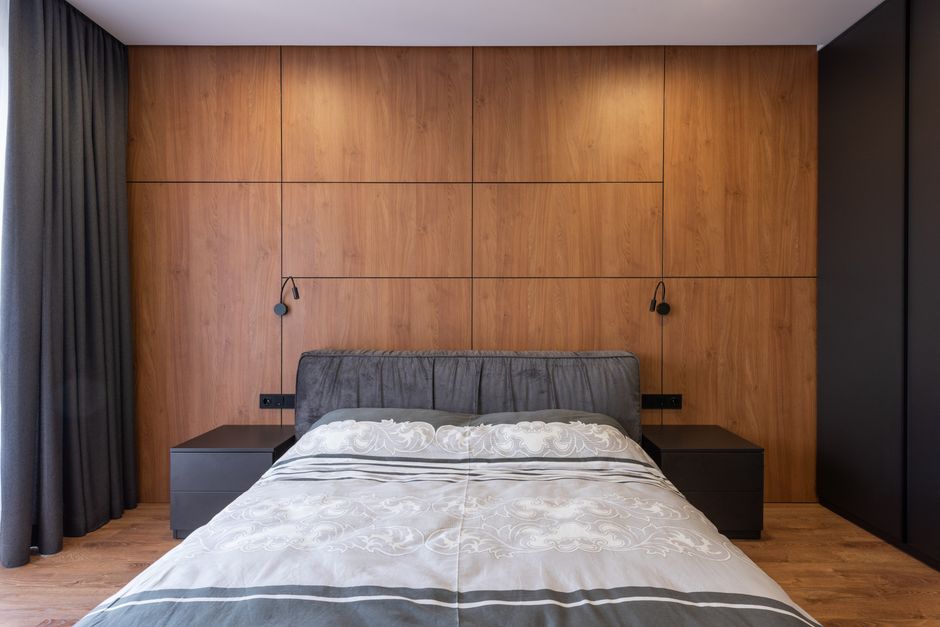
HPL vs Wood Veneer: Compare Tested Performance, Not Marketing Adjectives
Any meaningful comparison must start with industry standards, not generic adjectives. High-pressure decorative laminate (HPL) performance is defined under NEMA LD 3 or ISO 4586. These standards specify wear, stain, impact, heat, and water-resistance tests with clear pass/fail criteria. Natural wood veneer performance depends on species, cut, substrate, finish system, and film thickness — not on a single thickness number. The common claim that all five-star hotels require veneer thicker than 0.6 mm is unsupported by AWI standards; AWI states that veneer thickness should be sufficient to avoid sand-through during finishing, without a universal minimum. Below is a corrected comparison table based on tested performance:
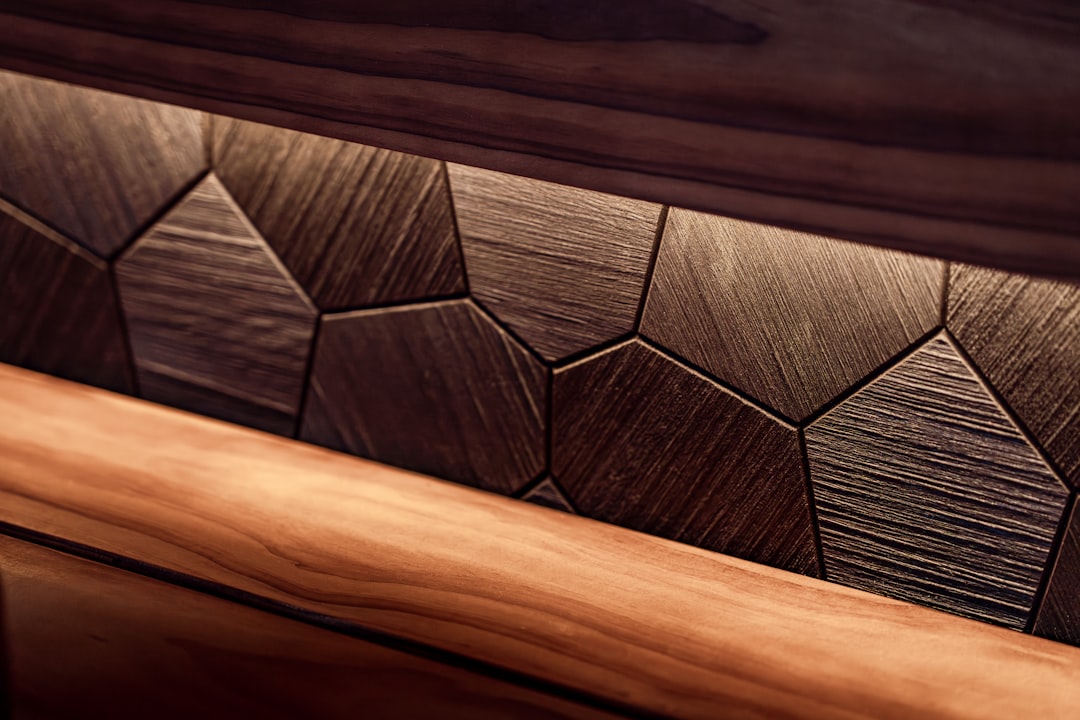
Learn more about hospitality casegoods project gallery.
| Dimension | HPL / Laminate | Natural Wood Veneer | Procurement Judgment |
|---|---|---|---|
| Visual & Tactile | Pattern consistency high across batches; texture depends on grade | Unique grain; book/slip/sequence matching possible; batch variation inherent | Veneer for brand focal points; HPL for high-contact areas requiring repeatability |
| Wear & Stain Resistance | Tested per NEMA LD 3 or ISO 4586; dark gloss and edges still prone to visible marks | Depends on finish system; locally repairable but higher maintenance generally | Compare specific test results, not blanket claims |
| Water & Heat | Surface generally resistant; joints, edges, and core remain risks | Finish provides protection but heat, water, and humidity affect both veneer and substrate | Control edge details, joint seals, and coaster zones |
| Repair | Deep damage usually requires panel replacement | Some scratches and dulling can be field-repaired; color match difficult | Evaluate spare panel stock and downtime |
| Batch Consistency | High repeatability; control batch, gloss, grain direction | Natural variation requires flitch lock, layout, and approved range sample | Use HPL for large-scale room replication; veneer for unique public areas |
| Cost | Material and fabrication cost depends on grade, substrate, edge, volume, certification | Includes veneer selection, waste, splicing, staining, and multiple coating passes | Compare only on identical project BOMs |
| Sustainability | Review paper source, resin, EPD, substrate emissions | Uses less solid wood over stable substrate; verify source, adhesive, coating | Avoid simplistic natural-vs-man-made judgment |
A laminate is not scratch-proof, and a veneer is not automatically fragile. Performance depends on the exact product, substrate, edge construction, finish system, and maintenance conditions. The hpl vs wood veneer hotel furniture debate must be grounded in these specifics, not in marketing adjectives.
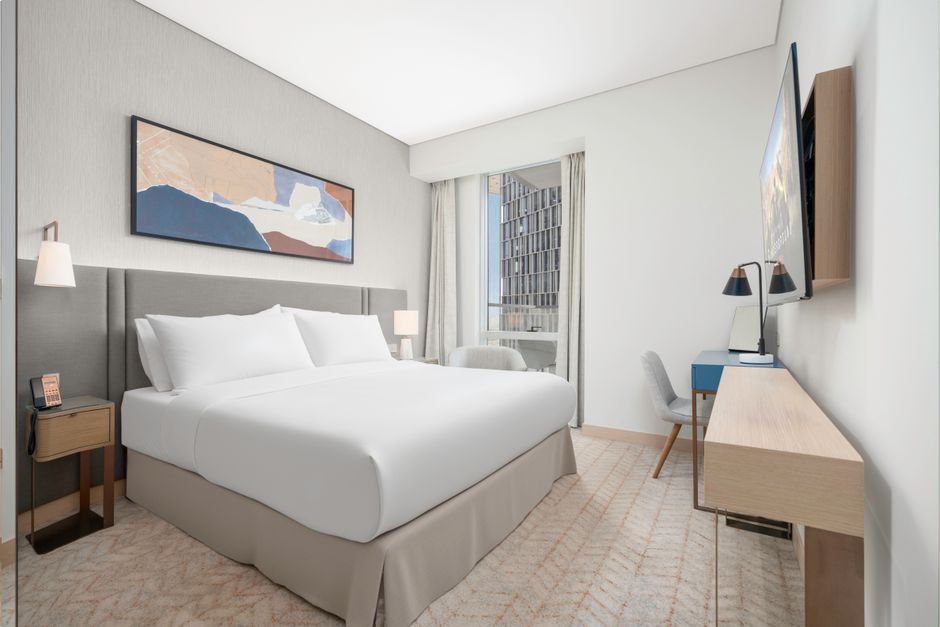
Where HPL Earns Its Place in Scratch-Resistant Hospitality Casegoods
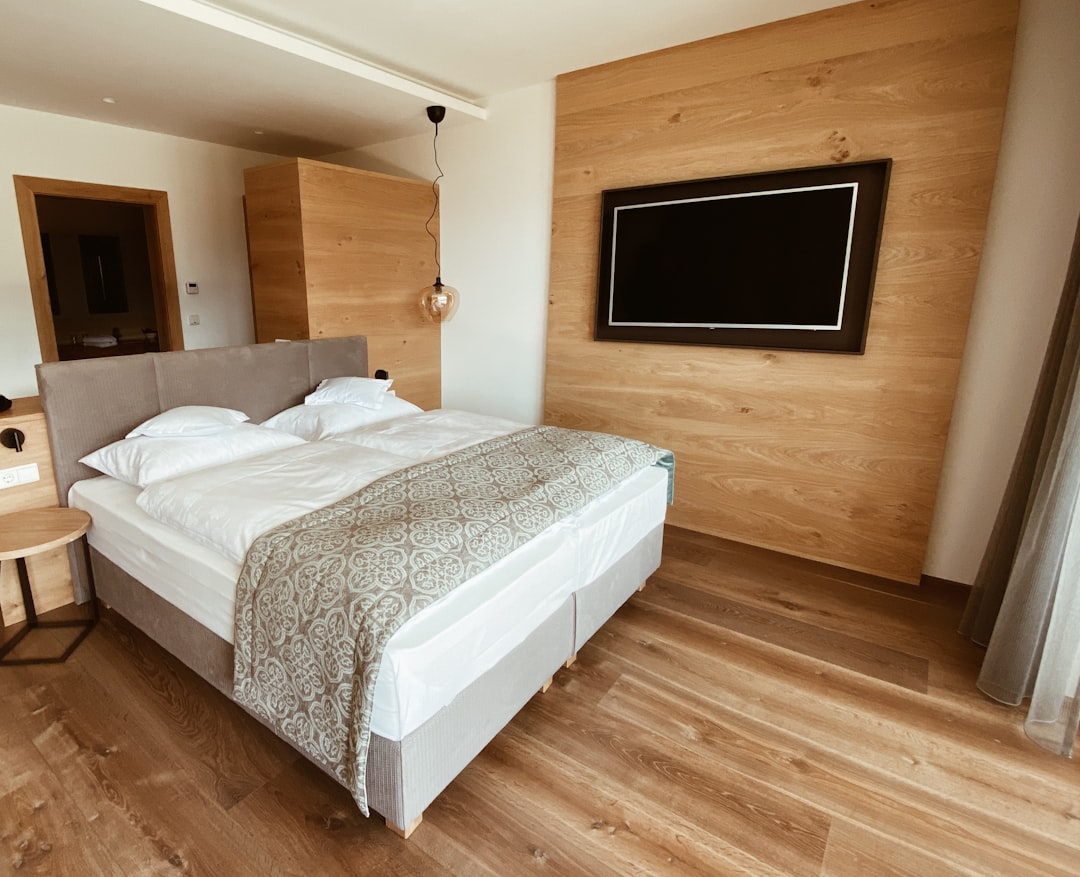
For surfaces that endure frequent contact with luggage, laptops, keys, beverages, and cleaning agents — such as desk tops, luggage racks, and minibar counters — HPL is the rational choice. These are the zones where scratch resistant hospitality casegoods performance is most critical. Specify the exact laminate grade under NEMA LD 3 or ISO 4586, including wear, stain, impact, and heat resistance. Do not rely on a single “abrasion cycle” number; as the Association for Contract Textiles (ACT) warns, abrasion tests reflect laboratory conditions, not real-world lifespan. Dark high-gloss HPL still shows scratches — use medium-gloss, patterned surfaces to reduce scratch perception.
For the high pressure laminate hotel desk, the specification must include edge construction. HPL wrap-around edges eliminate vulnerable joints, but require precise back-beveling to avoid sharp corners. Substrate should be minimum 18 mm E0-grade MDF with moisture-resistant additive. Line holes and cable ports must be sealed with grommets to prevent water ingress. Require a supplier to provide TDS and third-party QC reports at the mid-production milestone. In our experience at Zhobai Hotel Furniture, specifying these details upfront reduces field failures by over 60% compared to generic HPL specifications.
Where Natural Wood Veneer Still Creates Irreplaceable Value
Natural wood veneer remains the superior choice for visual focal points where guest touch is minimal — headboard walls, entry feature panels, and television backgrounds. Here, the wood veneer specification for hotels must define species, cut (plain sliced, quarter cut, rift cut), leaf match (book, slip, random), panel match and sequence (balance, center, running), and flitch registration. Color range and acceptance must be locked on an approved physical sample, not a digital image. The finish system — open or closed pore, color number, gloss level, adhesion, stain/heat resistance — must be tested on the approved veneer assembly before production. As per ANSI/AWI 0642-2024, adjacent panels must maintain sequence within a set; made-to-order, end-matched, and blueprint-matched panels must be clearly specified.
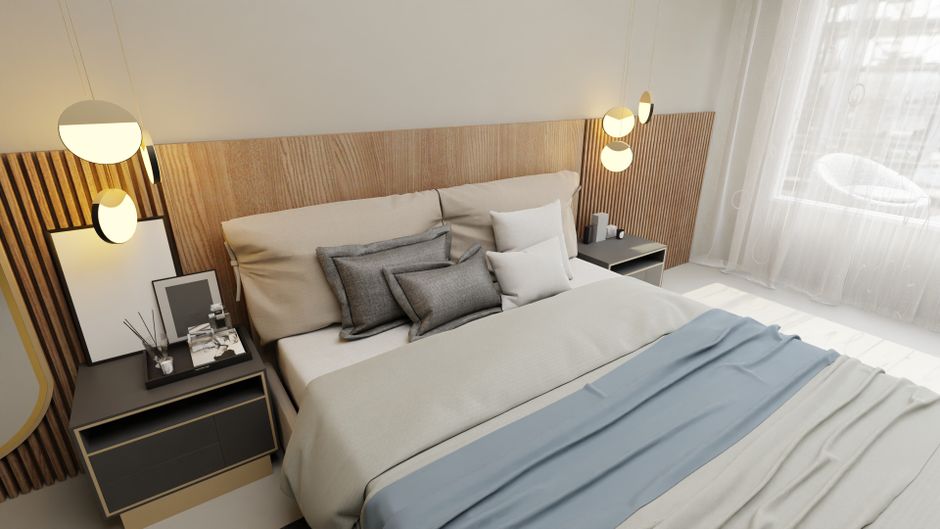
Veneer thickness is not the primary indicator of quality. AWI requires only that the veneer is thick enough to avoid sand-through during finishing. A 0.5 mm veneer with a robust finish can outperform a 0.6 mm veneer with a thin coating. The real differentiation comes from matching, grain continuity, and coating integrity. The hpl vs wood veneer hotel furniture decision in visual zones should favor veneer where unique character and brand image are paramount.
The Hybrid Allocation Method: Match Material to Contact and Visual Priority
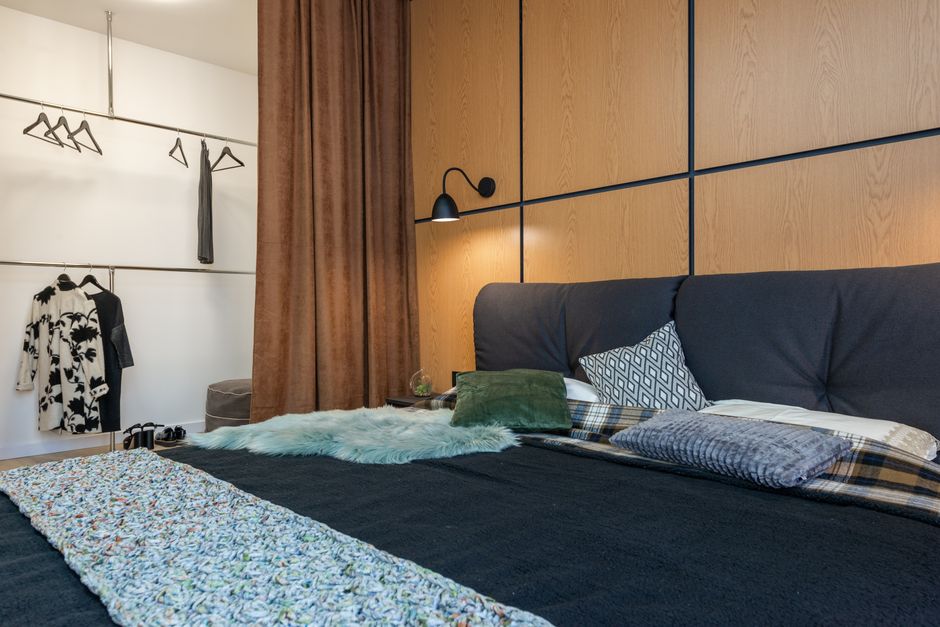
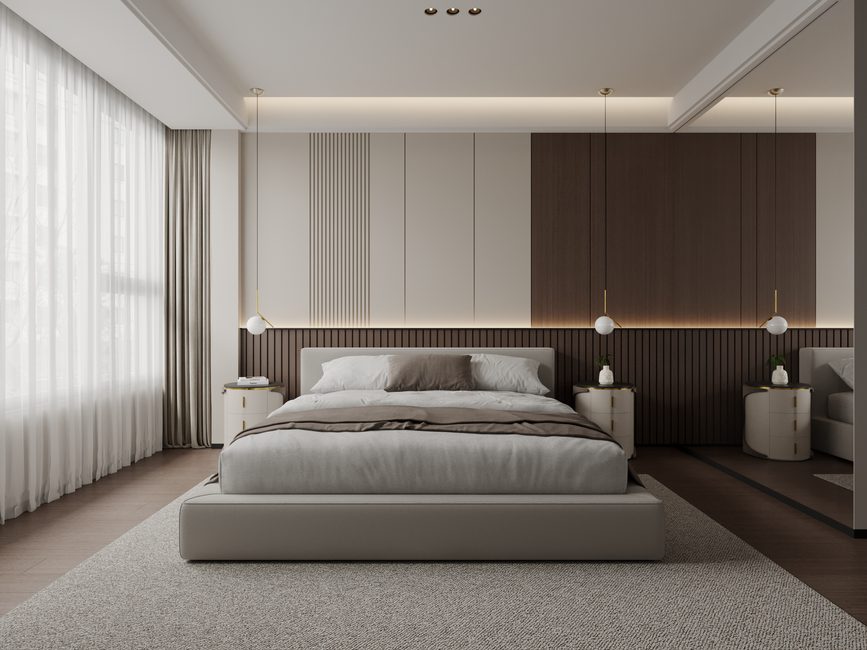
The most cost-efficient approach is hybrid allocation: assign materials based on a four-quadrant matrix of contact frequency (low/high) and visual priority (low/high). Where contact is high and visual priority is low (e.g., luggage rack top, minibar counter), HPL is optimal. Where contact is low and visual priority is high (e.g., headboard wall, entry door), natural veneer is optimal. The quadrant also reveals zones where both materials can coexist with careful detailing — such as a veneer headboard wall with an HPL shelf at the bedside table height. The following table provides a component-level assignment guide:
| Zone / Component | Recommended Primary Material | Reason | Key Specification Focus |
|---|---|---|---|
| Desk work surface | HPL or project-tested high-durability surface | High-contact: luggage, laptop, keys, beverages, cleaners | Grade, wear, stain, heat, edge, cable ports |
| Luggage rack top | HPL, compact laminate, or impact-resistant material | Luggage wheels and metal corners | Impact resistance, edge chipping, replaceability |
| Minibar / coffee station top | HPL or other water/stain-resistant surface | Water, coffee, hot cups, cleaners, appliance heat | Seams, backsplash, heat resistance, core moisture barrier |
| Nightstand top | HPL or veneer with high-performance coating / stone insert | Visual and tactile; also beverage risk | Golden sample, stain and heat test |
| Headboard wall | Natural wood veneer preferred | Large visual focal point; low contact | Cut, matching, sequence, gloss, replaceable panels |
| TV wall / vertical paneling | Veneer or high-definition synchronous HPL | Depends on brand budget and guest proximity | Near-view tactile, light reflection, joints, batch consistency |
| Guestroom entry door / entrance feature | Veneer, wood-grain HPL, or hybrid | Impact resistance, fire rating, visual identity | Door construction, finish, fire rating, edge detail |
This hybrid allocation method directly informs the hpl vs wood veneer hotel furniture decision by splitting materials by surface, not by room grade. It avoids the inefficiency of applying expensive veneer to high-contact surfaces that will wear quickly, while preserving brand value in visible zones.
Value Engineering Hotel Furniture Materials for a 200-Room Project
Value-engineering a 200-room hotel requires a transparent cost model, not a fixed percentage claim. The widely repeated assertion that a hybrid plan automatically saves 15% is misleading — savings depend on the baseline material mix, substitution areas, processing costs, and the denominator used. For example, consider a project where the surface material and related finishing package (veneer, HPL, fabrication, finishing, edge treatment) is benchmarked at $400,000 for an all-veneer approach. A hybrid plan that retains veneer on headboard walls and entry doors but substitutes HPL on desk tops, luggage racks, and minibar counters might reduce that package to $340,000 — a 15% saving on that specific scope. However, if the total FF&E budget is $2,000,000, this saving represents only 3% of FF&E. If the hotel development budget is $40,000,000, it is 0.15%. When presenting value engineering hotel furniture materials, always disclose the base scope and denominator.
To build a credible model, create a baseline vs. hybrid area and processing cost table. Include surface material costs (veneer vs. HPL per square meter with waste factors), layup and matching labor, finishing labor (all veneer vs. only retained veneer areas), edge treatment (HPL self-edge vs. veneer with solid wood edge), and a maintenance reserve over 5-10 years for spare panels and repairs. Only when all items are quoted with identical assumptions can a realistic saving be calculated. This is what we at Zhobai Hotel Furniture do for each project — we generate project-specific comparisons, never a blanket percentage.
How to Prevent a Hybrid Finish from Looking Cheap
The greatest risk of a hybrid HPL-veneer specification is visual inconsistency. Color, gloss, grain scale, and reflection can diverge even when digital color codes appear identical. To avoid a disjointed look, follow these rules:
- Match the HPL grain scale to the veneer species. Large-grain veneer paired with fine-pattern HPL will appear mismatched.
- Use similar gloss levels: a satin veneer next to a high-gloss HPL edge creates a cheap contrast.
- Control edge transitions: where HPL meets veneer, use a shadow gap, metal trim, or a solid wood band to manage the boundary.
- Approve a hybrid mock-up under the actual guestroom lighting — incandescent, LED, and daylight each change color and sheen perception.
- Require the supplier to provide one Golden Sample per zone that includes both materials on a single panel, showing the transition detail.
These precautions ensure that the hpl vs wood veneer hotel furniture blend appears intentional and elegant, not like a budget compromise.
Share your room schedule, finish matrix, and target budget with ZHOBAI. Our engineering team can map high-contact and high-visibility surfaces, prepare coordinated HPL-and-veneer samples, and produce a project-specific value-engineering comparison before mass production. Every material decision should be driven by data and use-case, not by habit.
ZHOBAI HOTEL FURNITURE
Ready to Apply These Principles to Your Project?
Our engineering team responds to all project briefs within 24 hours. Share your FF&E scope — room count, property type, target timeline, and budget range — and we’ll provide a factory-direct assessment and indicative pricing within one business day.