Navigating complex global safety codes requires aligning each destination, occupancy, and product category with standardized hotel furniture fire rating standards. In the Middle East and Africa (MEA), the gap between code interpretation and actual project execution causes costly delays. This article provides a technical framework for specifiers and procurement managers to evaluate fire, moisture, and corrosion requirements before ordering FF&E. We reference the comprehensive Hotel Furniture Specifications Guide for broader context.
Hotel Furniture Fire Rating Standards Are Jurisdiction-Specific
Fire rating requirements for hotel furniture are not uniform across the MEA region. Each country enforces its own building code, and within a country, the applicable test methods depend on occupancy class, product type, and the authority having jurisdiction. A five-layer verification framework must be applied: (1) national fire code and local amendments, (2) building occupancy schedule (guestroom, lobby, restaurant, employee area), (3) product category (upholstered seating, mattress, curtain, wood veneer), (4) accepted test standard (BS 5852, EN 1021, ASTM E84), and (5) material combination (fabric, interliner, foam, substrate).
Learn more about Hotel FFE Budget GCC.
Learn more about Import Hotel Furniture to Middle East.
Saudi Arabia’s Building Code SBC 801-CR-2024 dedicates Section 805 to upholstered furniture and mattresses. This section outlines compliance requirements that feed into the broader fire strategy approved by the Civil Defense. It does not, however, mandate a single ignition source for all projects. Similarly, the UAE Fire and Life Safety Code requires that upholstered furniture and mattresses be listed and approved by Civil Defence. Dubai Civil Defence publishes a Material Test Standards list (September 2018) that includes EN 1021-2, a match-flame test for upholstery composites. These documents confirm that hotel furniture fire rating standards in the Gulf are not reducible to one passing criterion.
A specifier must collect the code register and fire consultant’s confirmation before issuing an RFQ. Asking a supplier for a generic “fireproof” certificate is insufficient. For projects across multiple GCC states, maintain a country-by-country compliance register. The authority decision, not a factory’s claim, determines acceptance.
BS 5852 Crib 5 in the Middle East: Required, Requested or Misquoted?
BS 5852:2006 assesses the ignitability of upholstered seating using smoldering and flaming ignition sources. Crib 5 is one of several flaming cribs — a wooden crib weighing about 17 g that generates a specific heat output. It is a relatively high energy source compared to Crib 1 or Crib 2. Many hotel brand standards, particularly from international operators, specify Crib 5 for guestroom seating. Fire consultants may also require it for lobbies or high-occupancy areas. However, no GCC national code mandates Crib 5 as a universal threshold. The confusion arises when procurement documents treat “BS 5852 Crib 5” as synonymous with “Civil Defense approved.”
In practice, a project may specify Crib 5 for sofas in public areas but accept Crib 1 for guestroom chairs if the fire strategy and authority approve. The key is to confirm the exact ignition source, the standard version, the material combination tested, and the laboratory’s accreditation. Do not accept a Crib 5 certificate that states only the fabric — the composite (fabric + interliner + foam + barrier if any) must be tested as a unit.
When evaluating bs 5852 crib 5 middle east requirements, ask the fire consultant for the specific ignition source and whether substitute test methods (e.g., EN 1021-2 for match flame) are acceptable for certain product categories. A supplier experienced in MEA projects can provide test documentation for the specified build-up. At Zhobai Hotel Furniture, we maintain laboratory reports for common brand-specified composites and can adjust the combination to meet project-specific limits.

What “Civil Defense Approved Hotel Furniture” Actually Means
The term “Civil Defense (CD) approved” is frequently misused. CD approval is not a factory-issued label; it is an authority decision based on project-specific submittals. The manufacturer submits test reports, material data sheets, and a traceability plan to the local Civil Defense office or an accredited third-party reviewer. The authority then issues a letter of approval or a No Objection Certificate (NOC) for that specific product range at that project location. This approval is not transferable to another project without re-submission.
To achieve civil defense approved hotel furniture, the supplier must provide: (1) test reports for the exact material combination from an ISO 17025-accredited lab, (2) a material submittal log linking each production batch to the tested build-up, (3) labels or tags on each piece confirming the test reference, and (4) a factory declaration that no substitutions occurred without re-approval. The project owner’s procurement team should verify these documents before shipment.
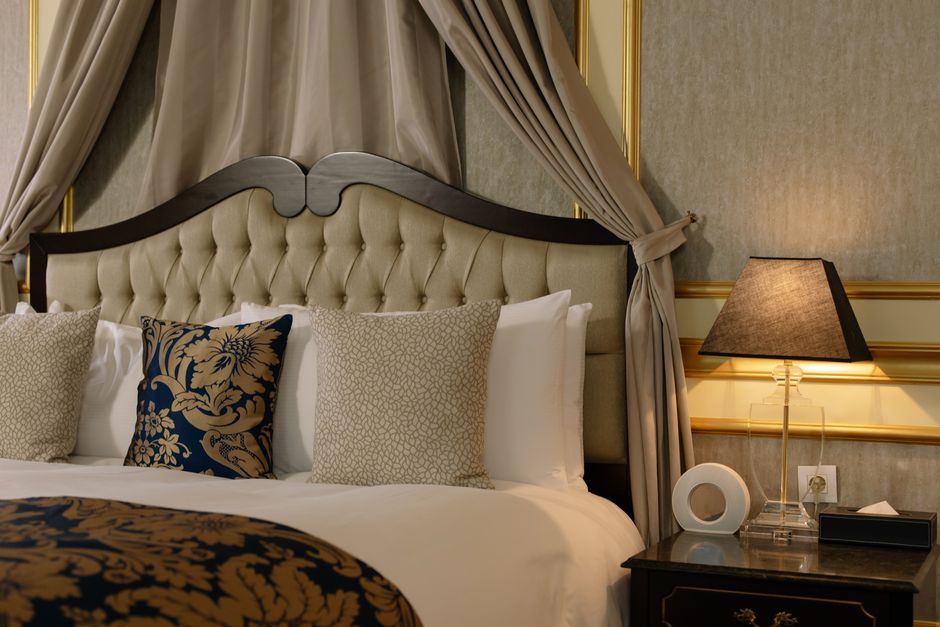
A common mistake is accepting a “Civil Defense approved” certificate that is actually a self-declaration. Always ask for the official correspondence from the authority or the NOC letter. At Zhobai, we prepare the submittal package with full traceability records and coordinate with the client’s local representative for authority submission — we do not issue CD approvals ourselves.
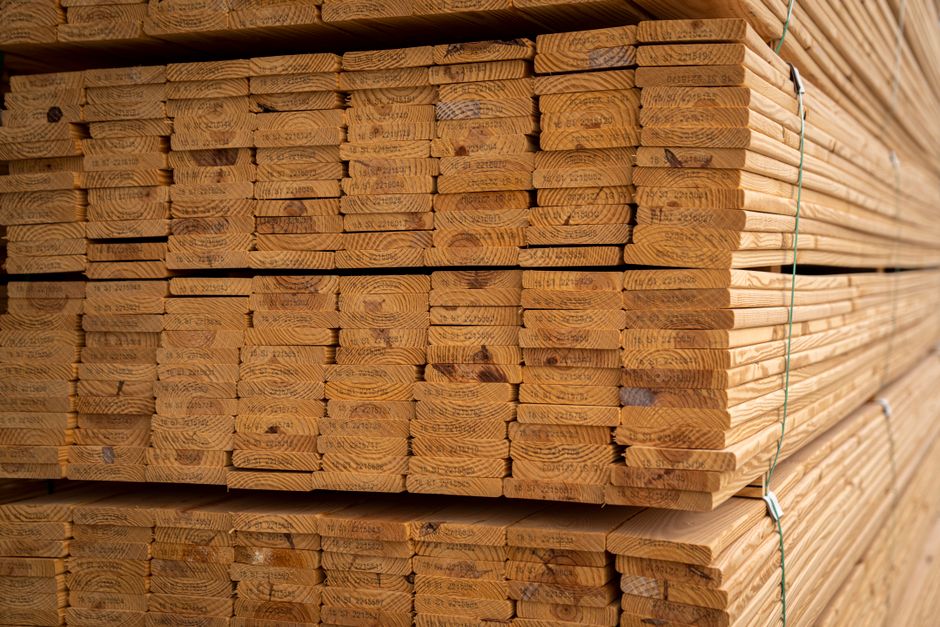
Hotel Furniture for GCC Extreme Climate
The GCC climate presents three distinct challenges to hotel furniture: interior dryness from continuous air conditioning, coastal salt corrosion, and dust abrasion. Interior relative humidity in conditioned spaces often drops to 30-40%, causing wood and veneer to lose moisture and shrink. Joints open, veneers crack, and panels warp if the material is not conditioned to the target equilibrium moisture content (EMC) before installation.
Specify a target EMC based on the hotel’s interior condition, typically 6-8% for GCC. The factory must document the moisture content of all wood-based substrates at production, packaging, and arrival. A balance of face-and-back construction, symmetrical layups, and stress-relief grooves minimizes warpage. Use moisture-barrier coatings on all six faces of panels, but understand that coatings only slow moisture exchange — they do not eliminate it.
For coastal projects, hardware corrosion is a real risk. Hotel furniture for gcc extreme climate should include a hardware corrosion matrix classified by zone: interior dry areas may accept zinc-plated steel with 72-hour salt spray resistance; bathrooms and balconies require 304 stainless steel or equivalent coated systems. Salt spray hours (per ISO 9227) are a laboratory comparison, not a direct service-life predictor. Specify the test method, coating thickness, and acceptance criteria (e.g., no red rust after 96 hours for critical items). Dust ingress can be managed by installing drawer runners with sealed bearings and using gaskets on moving parts.
Realistic cost impact: upgrading from standard zinc-plated drawer runners to 304 stainless steel adds approximately 15-25% to the hardware budget. Balancing performance with cost requires a project-level decision based on the building’s distance from the coast and the maintenance plan.
Tropicalized Hotel Furniture Moisture Control for Africa
High humidity in tropical African climates, combined with monsoon seasons and coastal environments, demands a “tropicalized” approach to casegoods. Tropicalized hotel furniture moisture control begins with destination climate data: monthly average RH, peak seasonal spikes, and the conditioned interior environment. Generic high-density board labels are not enough.
Key technical measures include: (1) specify moisture-resistant particleboard or MDF with low thickness swell (TS) — less than 8% after 24-hour immersion per EN 317; (2) apply a balanced coating system on all exposed and edge surfaces to reduce moisture gradient; (3) use tongue-and-groove joinery or floating panels to accommodate minor movement without structural failure; (4) select adhesives with good water resistance (e.g., melamine-urea-formaldehyde for edge banding); (5) avoid designs that trap water, such as solid wood tops that are not sealed on the underside or crevices where condensate can collect.
Mold resistance is a separate concern. If the project requires antimicrobial properties, a specialized additive can be mixed into the coating, but this must be validated by a test method specified by the project (e.g., JIS Z 2801 or ASTM G21). Do not rely on generic “antibacterial” labels without documented performance.
At Zhobai, we implement a tropicalization protocol for African projects: pre-conditioned substrates, moisture-proof packaging (aluminum foil barrier + inserted container desiccant), and a documented moisture content record from factory to site. The cost of tropicalized casegoods is typically 8-12% higher than standard indoor-grade furniture due to upgraded board, additional coating passes, and packaging materials.
Corrosion-Resistant Hardware Without the 96-Hour Myth
A common specification is “all hardware must pass 96-hour salt spray per ISO 9227.” This is a reasonable project-level requirement, but it is not a universal code or a guarantee of outdoor durability. Salt spray testing is comparative: it rates the coating system’s performance under accelerated conditions, but the correlation to real-world service life depends on the local corrosivity category (ISO 9223), exposure duration, and maintenance.
For interior hotel furniture in GCC coastal cities, a 96-hour neutral salt spray (NSS) test with less than 5% red rust on the base metal is a defensible acceptance criterion for concealed hardware (hinges, brackets). Exposed handles or bathroom hardware may require 200+ hours or the use of 316 stainless steel. The test report must state the substrate, coating system (e.g., zinc plating with yellow passivation), and the evaluation standard (e.g., ISO 10289).
Selecting stainless steel grade also requires a corrosion risk matrix. 304 stainless steel is cost-effective for most interior applications but can corrode in chloride-rich environments if the surface is scratched or if crevices trap moisture. For outdoor furniture or areas near seawater pools, 316L is more reliable. The cost difference between 304 and 316 stainless steel hardware is approximately 30-40% — so grade selection should match the actual corrosivity zone.
Avoid the myth that all hardware must be 304 stainless steel. In dry, conditioned interiors, a verified coating system may provide acceptable performance at lower cost.
Preventing Container Rain on Long-Distance MEA Shipments
Container rain — condensation inside the shipping container — is a leading cause of moisture damage to hotel furniture during MEA sea freight. The phenomenon occurs when warm, moist air inside the container cools below the dew point, depositing water on cold surfaces (container roof, walls, and cargo). Prevention requires a multi-step approach, not just throwing in silica gel packs.
First, ensure the cargo itself is dry at packaging. The moisture content of wood-based panels should be within the target range and stable. Second, inspect the container for cleanliness, odor, and previous cargo residue. Third, use a moisture-barrier packaging: heat-sealed aluminum foil bags or heavy-duty polyethylene shrink wrap for casegoods, with desiccant placed between the barrier and the product. Fourth, calculate desiccant quantity based on the cargo’s moisture load, container volume, voyage duration, and expected temperature swing. Typical guidelines: 2-4 units of activated clay or silica gel per cubic meter of container space, but adjust for high-risk routes.
Document the packing plan with photos, moisture readings at packaging, desiccant calculation, and a container inspection certificate. Upon arrival, measure the cargo’s moisture content before storing in the hotel’s conditioned environment. A 2% increase from factory to site warrants investigation.
The cost of a proper moisture-barrier packaging program is typically 3-5% of total furniture cost but can prevent claims worth 10-20% of the shipment value from water damage, mold, or dimensional changes.
Build a Destination-Specific Compliance Matrix Before Ordering
Before releasing a purchase order for any MEA project, assemble a compliance matrix that covers fire testing, moisture control, corrosion resistance, and packaging. The matrix should list: destination country, city, hotel brand, occupancy schedule, product categories, and the fire consultant’s required test methods. For each product category, define the material combination, the lab report requirement, the approval process, and the responsible party (supplier, consultant, or authority). For climate risks, note the target EMC, the corrosion zone, and the packaging protocol.
This matrix becomes the reference document for all supplier communications and factory inspections. It prevents the common error of assuming that what worked in Dubai will pass in Riyadh or Lagos. At Zhobai Hotel Furniture, our engineering team prepares such a matrix as part of the pre-order technical review, using the client’s project data and our experience in over 20 MEA markets. We invite procurement managers to share their destination, brand, and fire consultant requirements with us so we can develop a project-specific compliance register and climate-risk checklist before sampling and quotation.
ZHOBAI HOTEL FURNITURE
Ready to Apply These Principles to Your Project?
Our engineering team responds to all project briefs within 24 hours. Share your FF&E scope — room count, property type, target timeline, and budget range — and we’ll provide a factory-direct assessment and indicative pricing within one business day.