What share of your hotel’s total development cost should FF&E consume before it becomes a budget risk? Industry data indicates that 60% of hotel project delays trace directly to poorly managed FF&E procurement. Yet most GCC developers start a project without a clear answer to that question. This article provides the specific numbers, timelines, and decision frameworks you need to keep your hotel FF&E budget Middle East under control from planning to installation.
1. What Is FF&E and Why It Defines Your Project Budget
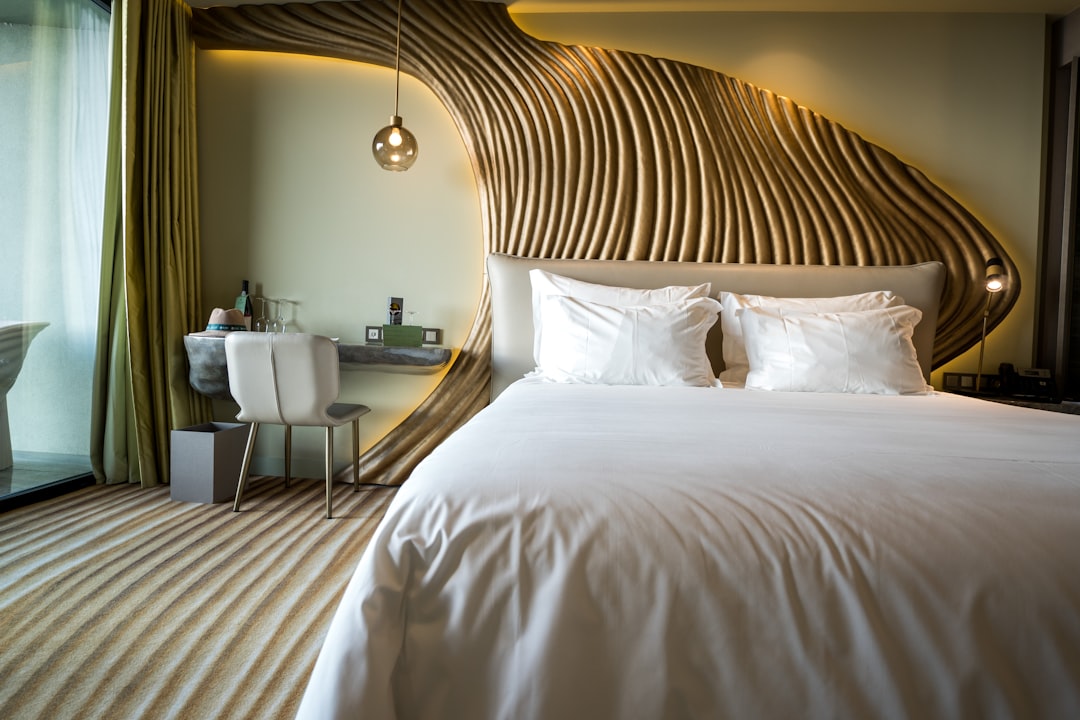
FF&E stands for furniture, fixtures, and equipment — all movable, non-structural items in a hotel: beds, headboards, nightstands, desks, wardrobes, sofas, lobby seating, dining tables, outdoor furniture, and more. It is distinct from OS&E (operating supplies and equipment), which includes items with a life under one year such as linens, china, and cleaning supplies. The two categories are often confused in early budgets, leading to oversights.
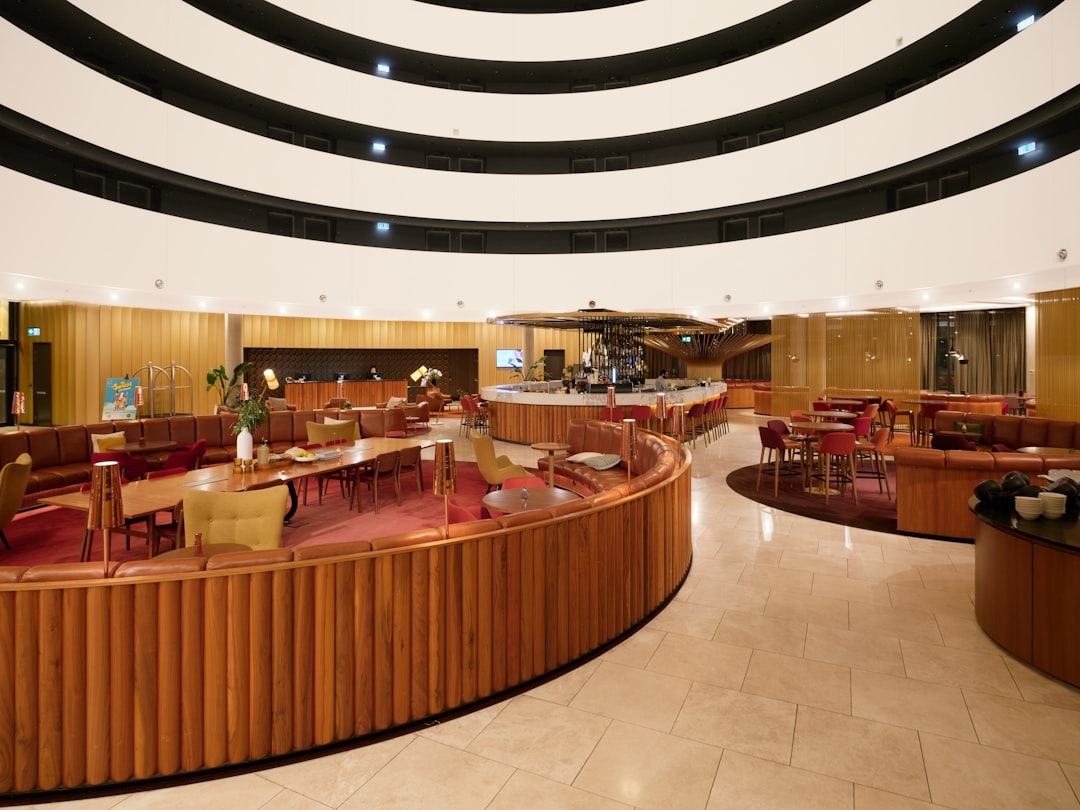
Learn more about latest hotel furniture design trends in the UAE.
Learn more about complete logistics guide for importing hotel furniture from China.
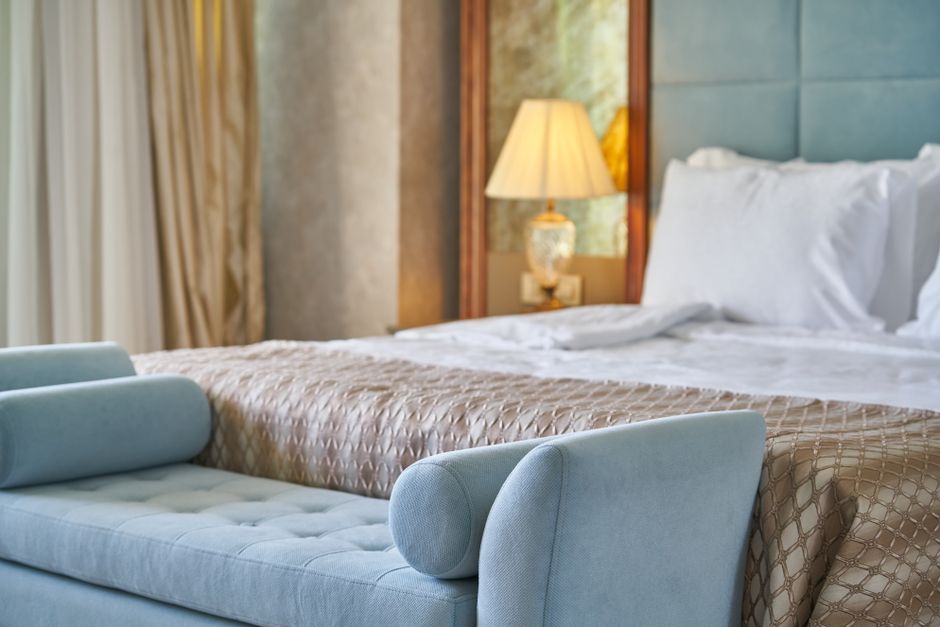
FF&E typically accounts for 8–15% of total hotel development cost for standard projects, rising to 20%+ for luxury properties. In GCC markets, where construction and land costs already squeeze margins, an uncontrolled FF&E budget can push the entire project into the red. Globally, the hotel FF&E market reached USD 67.6 billion in 2026, with China producing 28% of that volume. The Middle East is a growth hotspot: the UAE alone recorded 32.34 million hotel guests in 2025, and the region expects 93 new hotel openings in 2026. With a pipeline of 104 projects and 25,459 rooms in the UAE, the pressure to deliver on time and on budget is intense.
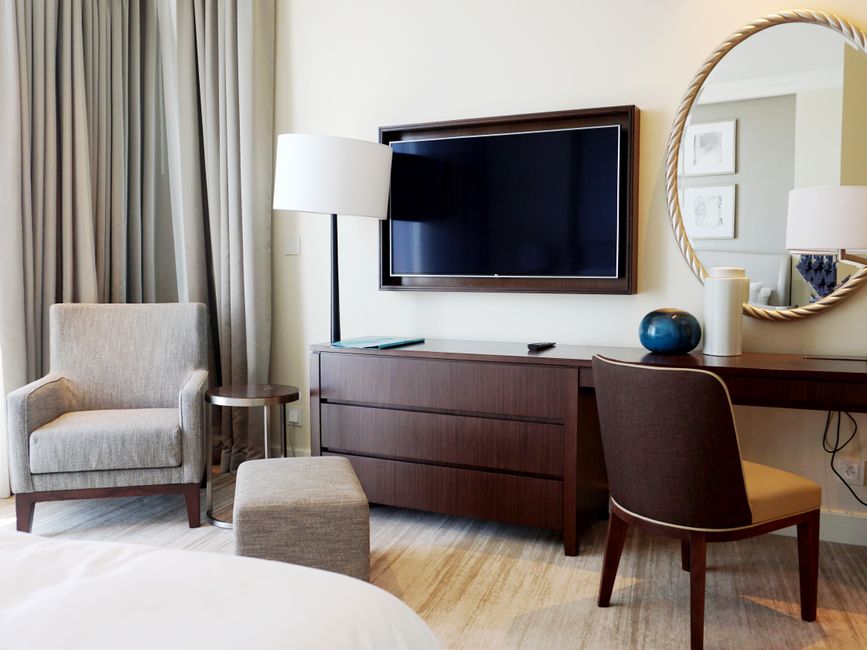
Because FF&E is a capital expenditure (CapEx) asset class that directly impacts guest satisfaction and property valuation, getting the budget right from day one is not optional. The following sections give you the benchmarks, timelines, and strategies to do exactly that.
2. FF&E Budget Benchmarks: Per-Room Cost by Hotel Category
The most useful planning tool for a developer is a realistic per-room cost range. These numbers are based on factory-direct pricing from Foshan, Guangdong (the primary production hub for hospitality furniture in China), with landed costs to the GCC adjusted for shipping, duties, and VAT. Use them as your starting point for hotel FF&E cost per room GCC planning.
| Hotel Category | FF&E Cost per Room (FOB China) | FF&E Cost per Room (Landed GCC) | % of Total Development Cost |
|---|---|---|---|
| Economy / 3-star | USD 4,000–8,000 | USD 5,000–10,000 | 8–10% |
| Mid-Market / 4-star | USD 8,000–18,000 | USD 10,000–22,000 | 10–12% |
| Luxury / 5-star | USD 18,000–40,000 | USD 22,000–50,000 | 12–15% |
| Ultra-Luxury / Boutique | USD 40,000–120,000+ | USD 50,000–150,000+ | 15–20%+ |
The landed GCC cost adds 15–25% for ocean freight and insurance, 5% import duty on CIF value, 5% VAT (reclaimable for VAT-registered entities), and last-mile logistics. Actual figures vary with customization level and order volume. Beyond furniture costs, several hidden expenses must be included in your hotel development cost Middle East projections:
- Shipping and insurance: 15–25% of FOB value
- Import duty (UAE/KSA): 5% of CIF value
- VAT: 5% (reclaimable for registered businesses)
- Warehousing: daily charges if construction delays require climate-controlled storage after customs clearance
- Attic stock: 2–5% of total order volume for future replacements, maintaining brand consistency
- Contingency: 10% of FF&E budget recommended by industry practice
3. The GCC Developer’s FF&E Procurement Timeline
Poor FF&E procurement management causes nearly 60% of hotel project delays. The root cause is almost always the same: starting too late. Below is a reverse timeline from opening, with specific milestones and risk points. Use this for your hotel furniture procurement timeline UAE schedule.
| Months Before Opening | Phase | Key Actions | Risk Notes |
|---|---|---|---|
| 18–24 | FF&E Planning | Finalize FF&E Specification (Schedule); set budget range; decide sourcing strategy (direct China, local, hybrid) | Spec must be complete before any RFQ; confirm compliance standards (fire rating, etc.) for target market |
| 12–18 | Supplier Screening & Factory Audit | Send RFQ to 3+ factories with detailed specs; receive proposals and sample-room quotes; arrange factory audit (on-site or video) | 41% of Chinese factories substitute wood species on orders under 100 pieces (e.g., rubberwood for ash/oak) — include penalty clauses |
| 9–12 | Sample Approval | Physical samples of key items: bed, primary seating, one casegood; approve material and finish samples; lock final specs | Skipping physical sampling is the #1 cause of costly rework |
| 6–9 | Order & Production | Pay 30% deposit; track production milestones; conduct mid-production inspection at 20–40% completion; engage SGS/BV/Intertek for pre-shipment inspection | Total lead time for overseas sourcing: 18–24 weeks; factories with pre-production testing have 2.3% defect rate vs. 12.7% without |
| 3–6 | Logistics & Customs | Arrange export docs (CO, fumigation, commercial invoice); book customs broker at Jebel Ali/Dammam/Jeddah; confirm last-mile offloading and storage | Doc error detention at Jebel Ali: ~USD 150/day/container; compliant docs clear in 1–3 days |
| 1–3 | Receiving & Inspection | Inspect at least 10% of pieces within 48 hours of arrival; use same AQL standard as pre-shipment; photograph all defects with labels, carton condition, and defect detail | Buyers with complete documentation win 78% of claims; only 18% without |
4. China Direct vs. Local GCC Sourcing: The Decision Framework
Choosing between direct factory sourcing from China and local GCC suppliers is the most consequential procurement decision for a developer. The table below quantifies trade-offs in cost, lead time, customization, quality control, and risk. This framework supports an informed hotel FF&E budget Middle East decision.
| Dimension | Direct China Sourcing | Local GCC Sourcing | Recommendation |
|---|---|---|---|
| Unit Cost | FOB price; volume advantage; 200-room project can save 3 layers of intermediary markup | Typically 40–80% higher than China FOB | For 100+ rooms, China direct has clear cost advantage |
| Lead Time | 18–24 weeks (production + sea + customs); start 12–18 months ahead | 6–10 weeks; suitable for urgent orders or small quantities | New builds → China direct; PIP/refurb or emergency → local |
| Customization | Full OEM/ODM; strong batch consistency; produce to brand standards | Limited customization; mostly stock items | Brand-standard custom pieces → China factory |
| Quality Control | Buyer must intervene actively: third-party inspection + contract specs. With QC: 2.3% defect rate; without: 12.7% | On-site inspection possible but product standards vary | Whichever route, write quality clauses into contract |
| Compliance Docs | Good factories provide full export docs (CO, fumigation, HS code); confirm GCC-specific certifications | Local vendors typically know UAE/KSA compliance | First-time China partner: request GCC doc checklist in contract |
| Risk | Wood substitution (41% on small batches); missing docs; FX risk | Inconsistent quality; limited stock | Both channels require written contract and quality assurance |
For a complete overview of hotel furniture procurement, see our Middle East Hotel Furniture Sourcing Guide.
5. The FF&E Specification Document: Your Most Important Project Asset
The FF&E Specification Document (FF&E Schedule) lists every furniture item by room type with detailed specs. It is the single source of truth for RFQs, production, and inspection. A proper FF&E specification hotel project document must be completed before any supplier is contacted — retrofitting specifications after procurement starts costs at least 30% more.
A qualified FF&E schedule includes per room type: item name, quantity, material (with grade), finish (with code), dimensions (tolerance +/- 2mm), fire-rating standard (e.g., BS 5852, CAL 117), compliance requirements, and delivery location. Fire-rated certifications vary by brand and GCC municipality — specify the exact standard in the spec.
Material substitution is the most common fraud in small-batch orders. Include a liquidated damages clause in the contract specifying penalties if, for example, rubberwood is used where ash or oak is specified. Physical sample approval is mandatory: produce prototypes of the bed, primary seating, and one casegood; lock the approved sample as the production standard; inspect pre-shipment against the sample.
Maintain a backup file with: signed purchase agreement + full material spec; approved sample photographs with dimensions; all email / WeChat communications; inspection reports at each milestone; bill of lading + packing list + commercial invoice + certificate of origin; compliance test reports; all change orders with timestamps and signatures. As noted earlier, complete documentation raises claim success from 18% to 78%.
Getting the FF&E budget right in a GCC hotel project demands specific per-room costs, a reverse-planned timeline, and a clear sourcing decision framework. The numbers and tables in this article give you a defensible starting point. At Zhobai Hotel Furniture, our engineering team uses these same benchmarks to help developers plan from day one — because we’ve worked through the factory floor realities and on-site installation challenges across hundreds of projects. Use the data here to build your hotel FF&E budget Middle East with confidence, and align your procurement strategy with the timelines and compliance demands of the Gulf market.
ZHOBAI HOTEL FURNITURE
Ready to Apply These Principles to Your Project?
Our engineering team responds to all project briefs within 24 hours. Share your FF&E scope — room count, property type, target timeline, and budget range — and we’ll provide a factory-direct assessment and indicative pricing within one business day.