Every unmanaged interface in a hotel project is a potential change order, delay, or dispute. The HVS 2025 U.S. Hotel Development Cost Survey shows a median total development cost of $218,556 per key, with FF&E averaging $21,000 per key—roughly 8–10% of the total budget. For a 200-room full-service hotel, that FF&E package alone exceeds $4 million. When procurement is split across multiple contracts, the friction between interfaces silently erodes both budget and schedule. Implementing integrated turnkey hotel development solutions is one of the most effective ways to control the rising cost of building a hotel today. This article dissects where that friction hides and how a unified procurement workflow can turn it into measurable savings.
The Four-Way Blame Game in a Fragmented Procurement Lifecycle
A typical fragmented hotel FF&E chain involves at least four parties: the interior designer, the general contractor, a purchasing agent or trader, and the furniture manufacturer. Each operates with separate incentives, separate documentation, and separate timelines. The result is a blame cycle that repeats on nearly every project.
Learn more about hidden costs of fragmented hotel FF&E procurement.
Learn more about controlling the rising cost of building a hotel today.
Designers issue production drawings but rarely verify factory capabilities. General contractors manage schedules but lack insight into millwork lead times. Purchasing agents add opaque markups and often use factories they have never audited. Manufacturers receive late or dimensionally inaccurate shop drawings, then produce furniture that fails to fit on-site. According to a 2020 study by Autodesk and FMI, poor-quality data and miscommunication cause an estimated $88.69 billion in rework annually—roughly 14% of all rework in construction. In hospitality, that rework typically represents 4–6% of total project cost.
Consider a typical sequence: the designer specifies a custom nightstand at 600 mm width. The purchasing agent transmits the spec without verifying the millwork clearance. The manufacturer builds to a 600 mm face, but the actual wall reveals 595 mm after drywall bulges. The nightstand must be trimmed or replaced. That single mismatch triggers a change order, a production delay, and expedited shipping costs. Multiply that by hundreds of line items across multiple rooms. Fragmentation does not remove cost; it often hides cost between contracts.
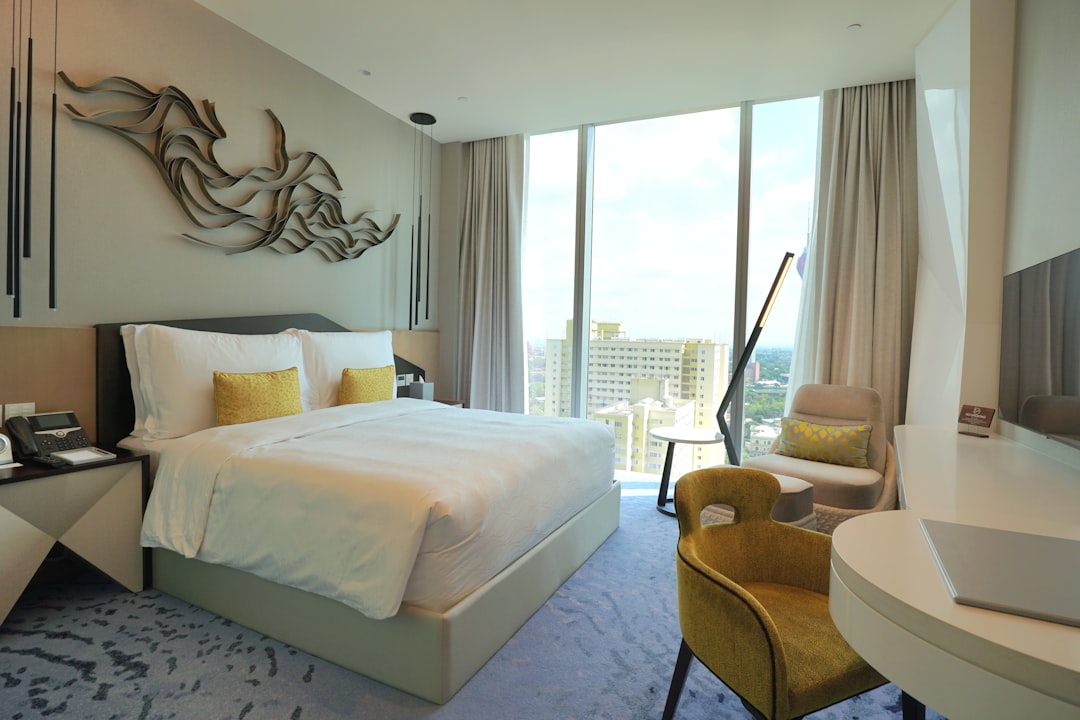
Communication breakdowns are not minor inconveniences. Autodesk reports that site teams lose nearly two workdays per week resolving preventable issues and searching for updated information. In a 36-month development cycle, that translates to months of lost productivity. The hospitality project procurement lifecycle becomes a constant battle against version errors, unchecked dimensions, and unclear ownership of decisions.

What Hotel FF&E Turnkey Procurement Actually Means
Integrated hotel FF&E turnkey procurement is not simply buying furniture from one supplier. It is a structured workflow that consolidates engineering, manufacturing, quality control, packaging, shipping, and installation coordination under a single accountable team. The scope begins before a single board is cut: engineering teams review design intent drawings, produce shop drawings, and conduct value engineering to match the budget. A mock-up room is built, tested for dimensions, finish match, and operator functionality. Once approved, production runs under a controlled quality plan with mid-production inspections. Finished goods are packed to commercial-grade export standards and shipped according to a windowed schedule aligned with the construction progress at the site.

On the delivery end, a turnkey provider coordinates container arrival, temporary storage if needed, and installation sequences. Punch-list items are resolved with the same team that manufactured the piece—no finger-pointing between suppliers. This end-to-end responsibility eliminates the gaps where errors multiply. It is the difference between supplying furniture on a shipping dock and delivering a functioning guestroom ready for opening.
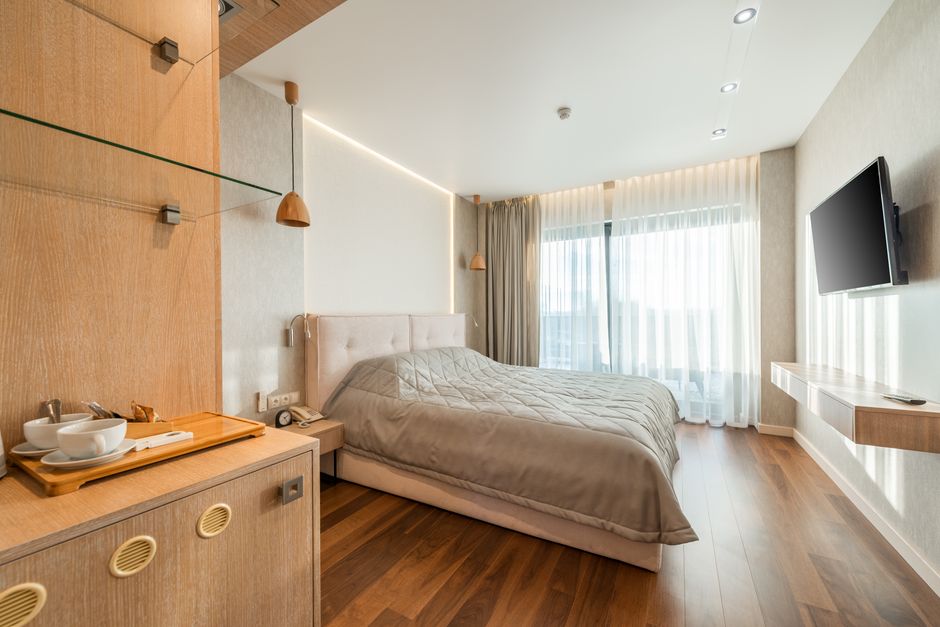
A properly executed turnkey hotel development solutions package includes:
- Design development support and shop drawings
- Value engineering to hit target costs without compromising brand standards
- Full-scale mock-up approved by the operator
- Factory production with in-line QC and third-party inspection milestones
- Industrial packaging for ocean freight with moisture barriers and corrugated corner protection
- Windowed logistics with real-time tracking
- Installation supervision and final punch-list
This scope replaces the fragmented handoffs that cause the majority of avoidable delays. It also provides a single point of accountability—a concept we explore next.
One Point of Contact, One Version of the Truth
Every interface that separates design from production is a potential point of data corruption. In fragmented procurement, the designer updates a dimension but the purchasing agent forwards an outdated drawing. The manufacturer builds to the old spec. The site installs before someone notices. Oracle’s 2023 research on integrated cost and schedule management demonstrates that separating cost, contract, and change data increases project inefficiency. In one case study, a manufacturer reduced schedule update time by 60% and saved monthly payment approval hours by consolidating controls.
Applying that logic to FF&E: when a single team holds the budget, the engineering drawings, the production schedule, and the logistics plan, every change is visible and traceable. The designer communicates directly with the factory engineer. The project manager receives one weekly report that covers manufacturing progress, shipping milestones, and installation readiness. There is no version mismatch because there is only one version—the current one.
One stop hotel furniture supplier that operates with this level of integration does not eliminate all risk; engineering and construction are complex. But it does eliminate the preventable rework caused by outdated drawings, unverified dimensions, and unclear change ownership. The cost of that rework, as we will quantify, is substantial.
The Financial Case: Where Avoidable Cost Really Hides
To understand the savings potential of integrated turnkey hotel development solutions, we must isolate four cost drivers that are avoidable in a well-managed procurement flow: agency markups, rework, logistics waste, and delay costs. The 15% CapEx reduction often discussed in industry circles is not a universal guarantee; it is a project-specific scenario that depends on the baseline procurement structure. Below is a transparent model based on a 200-room full-service hotel using HVS 2025 data.
Baseline Assumptions:
| Item | Value | Source |
|---|---|---|
| Total development cost per key | $409,513 | HVS 2025 Full-Service Median |
| FF&E budget per key | $34,464 | HVS 2025 Full-Service Median |
| Total FF&E budget (200 rooms) | $6,892,800 | Calculated |
| Average rework rate in fragmented models | 4–6% of FF&E cost | Autodesk/FMI + industry range |
| Agency markup range (typical) | 5–8% (depends on region) | Industry observation, no universal benchmark |
Avoidable Cost Breakdown (Scenario Model):
| Cost Driver | Fragmented Model (Est.) | Turnkey Model (Est.) | Potential Savings |
|---|---|---|---|
| Agency markup | $345,000–$550,000 | $0 (factory direct) | $345,000–$550,000 |
| Rework (design/production/on-site) | $275,000–$410,000 | $70,000–$140,000* | $135,000–$340,000 |
| Logistics waste (storage, demurrage) | $55,000–$95,000 | $20,000–$40,000 | $15,000–$75,000 |
| Opening delay (30 days, 200 rooms, 65% occ, $180 ADR) | $702,000 potential revenue | Avoided | $702,000 revenue exposure |
| Total FF&E-related savings (excluding revenue) | $495,000–$965,000 |
*Rework in a turnkey model is limited to production errors and minor punch-list items; design-interface rework is nearly eliminated because the factory engineer validates drawings before production.
The FF&E savings alone range from 7% to 14% of the FF&E budget. When combined with avoided opening-delay revenue loss (which is not a direct cost saving but a risk mitigation), the financial case for a unified approach becomes clear. The often-cited 15% total CapEx reduction requires including delay-related costs and holding cost of capital during extended construction. In this model, if we add the $702,000 revenue exposure (30-day delay) plus financing cost on the construction loan for that month (say 6% annual on $82 million = $410,000/month), the total risk mitigation is approximately $1.6 million, roughly 2% of total CapEx—not 15%. To reach 15%, the baseline must have exceptionally high rework and delay risks. Therefore, the 15% figure should always be presented as a project-specific scenario, not a universal promise.
When evaluating reducing hotel construction budget, the most impactful lever is not price negotiation but eliminating the hidden costs of fragmentation. A dollar saved on agency markup is a dollar saved. A dollar not spent on rework is a dollar that stays in the project.
How to Select a Contract-Grade One-Stop Hotel Furniture Supplier
Not every supplier that calls itself a one-stop provider possesses the engineering depth, production scale, and logistics capability to execute a full turnkey scope. Use the following checklist to evaluate partners before signing a contract.
- Engineering and shop-drawing capability: Does the supplier employ in-house engineers who can review architectural drawings and produce detailed shop drawings? Can they flag dimension clashes before production?
- Mock-up and approval process: Will the supplier build a full-scale mock-up of a standard room and common area? Is the mock-up used as the production benchmark?
- Material traceability and testing: Can the supplier provide third-party QC reports at mid-production? Do they have in-house testing for material strength, finish durability, and fire resistance?
- Industrial packaging standards: For cross-border projects, is the packaging designed for ocean freight with moisture barriers, edge protectors, and load-rated crating? A single damaged shipment can wipe out months of schedule.
- Windowed logistics coordination: Does the supplier offer a logistics plan with phased deliveries aligned to construction progress? Just-in-time delivery as defined by the Lean Construction Institute reduces storage, double-handling, and site congestion.
- Installation supervision and post-installation support: Will the supplier send a supervisor to guide on-site assembly and installation? Is there a clear punch-list and warranty process?
- Single-point accountability for defects: In the event of a production error, does the supplier take responsibility for replacement, including shipping and installation? Or will they blame the freight forwarder or installer?
A supplier that meets these criteria provides more than furniture; they provide a procurement management system.
Lock the Budget Before the Site Locks You In
The interface between design, production, and installation is where hotel projects lose time and money. Fragmented procurement hides those losses across multiple contracts, making them difficult to track and even harder to recover. A unified approach—what the industry calls turnkey hotel development solutions—does not eliminate the complexity of building a hotel. It consolidates that complexity into one accountable workflow. The result is a measurable reduction in avoidable costs, a faster path to opening, and a higher probability of delivering the project on budget. At Zhobai Hotel Furniture, our engineering team has managed FF&E projects from 20-key boutique renovations to 500-room resorts across Europe, Asia, Africa, and the Americas. We operate from a manufacturing facility exceeding 10,000 m² with in-house engineering, shop-drawing, and material testing capabilities. We build mock-ups, conduct third-party QC, pack to industrial standards, and coordinate delivery windows. The objective is not to promise zero rework; it is to eliminate the preventable rework caused by fragmented handoffs. When you consolidate procurement under a single point of accountability, the cost of fragmentation becomes visible—and it becomes avoidable.
Frequently Asked Questions
What is included in turnkey hotel development solutions?
It typically includes design development support, value engineering, shop drawings, mock-up room, manufacturing with QC, industrial packaging, logistics coordination, and installation supervision—all under one contract.
How is turnkey FF&E procurement different from using a purchasing agent?
A purchasing agent usually sources and negotiates but does not manufacture, pack, or install. Turnkey procurement integrates these functions under one accountable team, reducing markups and communication gaps.
What percentage of hotel development cost is FF&E?
According to HVS 2025, FF&E averages 8–10% of total development cost, varying by hotel segment.
Can one-stop hotel furniture procurement reduce construction costs?
Yes, by eliminating agent markups, reducing rework, minimizing storage and delay costs. The savings are project-specific but can represent 7–14% of the FF&E budget.
When should an FF&E manufacturer join the hotel design process?
Ideally during schematic design or design development. Early involvement allows the factory engineer to provide feedback on constructability, material availability, and cost before drawings are finalized.
How long does hotel FF&E procurement take?
From engineering to delivery, a typical timeline is 16–24 weeks, depending on quantity, customization, and shipping route. This does not include installation time.
ZHOBAI HOTEL FURNITURE
Ready to Apply These Principles to Your Project?
Our engineering team responds to all project briefs within 24 hours. Share your FF&E scope — room count, property type, target timeline, and budget range — and we’ll provide a factory-direct assessment and indicative pricing within one business day.