When you receive three quotes from Chinese factories for the same hotel wardrobe, the prices can vary by 40%. The difference rarely comes from labor costs—China’s major manufacturing hubs have comparable wage levels. Instead, the driver of any hotel furniture material price comparison is the specification sheet: base substrate (MDF vs. plywood), surface finish (HPL vs. wood veneer), and hardware grade. This article decodes that sheet. After reading, you will be able to interpret each line in a quotation and know where to save and where to invest. When evaluating the initial Cost to Furnish a Hotel, understanding raw material cost drivers is your best defense against budget overruns.
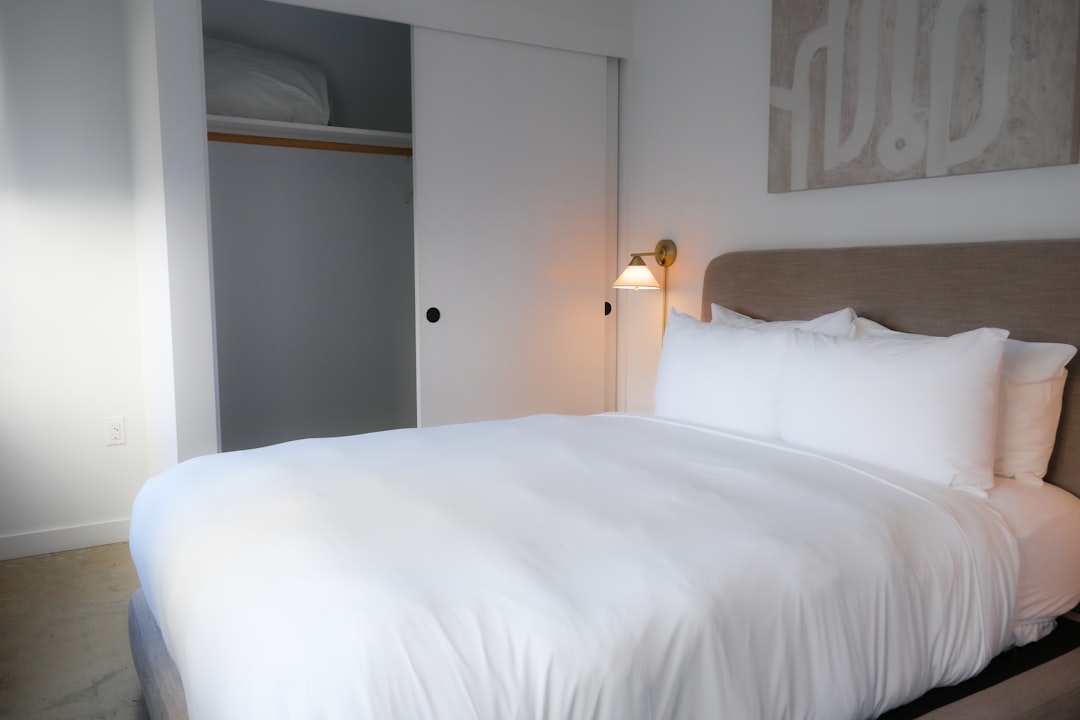
Why Material Selection Predicts Your Total FF&E Budget
The core variable in any hotel furniture material price comparison is not labor but the combination of base substrate and surface finish. For a typical hotel wardrobe, manufacturing cost breaks down as follows: substrate (MDF/plywood) 20–30%, surface treatment (HPL/wood veneer + lacquer) 25–35%, hardware 15–20%, labor 15–20%, and other (packaging, overhead) 10–15%. Material selection influences the first two categories, which together account for 45–65% of total cost. A wardrobe built with MDF substrate and HPL surface versus plywood substrate and custom wood veneer with a five-coat lacquer finish can differ by 30–50% in cost. For a 200-room project, a single wardrobe price difference of USD 80 translates to USD 16,000 in total budget gap. This is why material decisions must be locked during the RFP stage, not corrected after quotes arrive. Sourcing directly from top Chinese manufacturing clusters (Guangdong Foshan/Shunde) can save 30–50% compared to European contract furniture makers—but that advantage depends on knowing what to specify. Otherwise, a low price may simply mask low-grade materials.
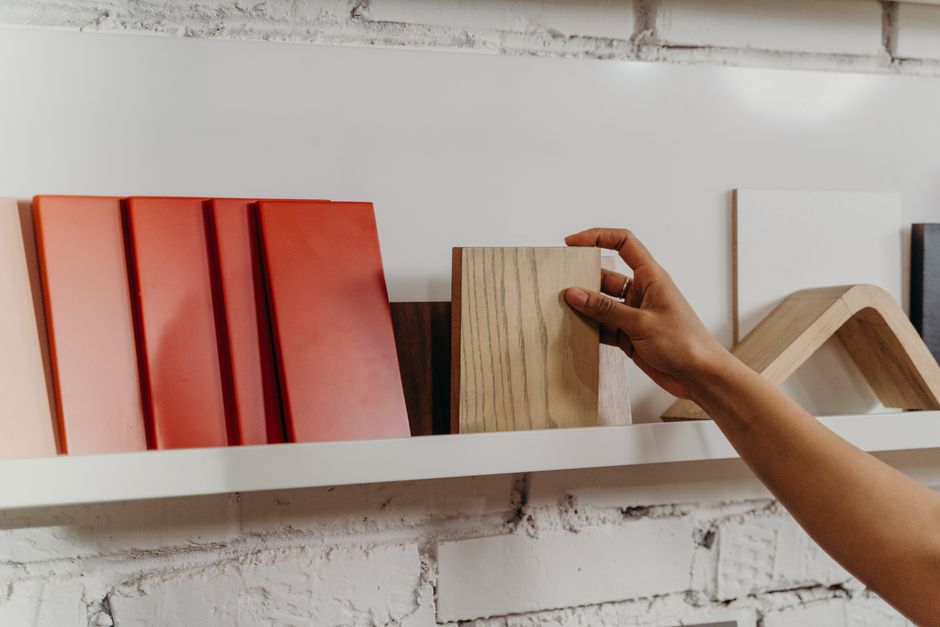
Learn more about hidden costs in hotel furniture procurement.
Learn more about hotel wardrobe material specifications and pricing.
Buyer Action: In your RFP, require suppliers to list the exact substrate type, thickness, grade, and surface finish specification for each item.
MDF vs. Plywood: The Base Material Cost Matrix for MDF vs plywood hotel furniture cost
Understanding the cost and performance differences between medium-density fiberboard (MDF) and plywood is the first step in any hotel furniture material price comparison.
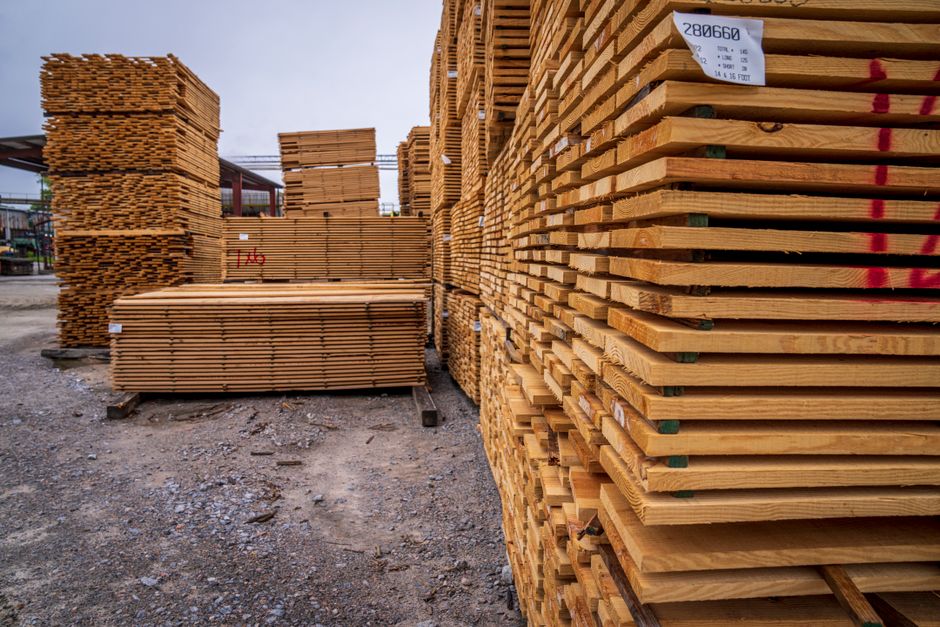
| Comparison Dimension | MDF (Medium-Density Fiberboard) | Plywood | Hotel Procurement Recommendation |
|---|---|---|---|
| Raw material price (US market, 3/4″ 4×8 sheet) | USD 35–55 per sheet | USD 50–70 (standard) / USD 75–130 (hardwood-faced) | Ratio holds for China factory prices; plywood is 15–25% more expensive |
| Cost per sqft (including edge banding) | USD 4–9/sqft | USD 6–12/sqft | Plywood 15–25% higher, depending on grade |
| Surface smoothness | Excellent—no grain, ideal for HPL/foil lamination | Has grain; more surface prep needed for smooth finish | MDF preferred for HPL surfaces; plywood works for veneer |
| Screw holding power | Weak—screws strip easily, especially in edge grain | Strong—cross-laminated structure holds screws securely | Hinge and lock points must use plywood or solid wood reinforcement blocks |
| Moisture resistance | Poor—standard MDF swells and warps in humidity; MR-MDF is better but costs more | Good—especially BWP-grade with waterproof glue; can recover after drying | Bathroom cabinets, wardrobe bottom panels, high-humidity regions: use plywood |
| Bending strength | Low—shelves over 600mm span may sag | High—cross-layered structure provides excellent span strength | Long-span shelves use plywood; fixed shelves MDF acceptable |
| Machining precision | Excellent—CNC carving, grooving, and shaping produce clean edges | Good—cut edges need treatment; surface layers wear tools faster | Intricate shapes: MDF; structural parts: plywood |
| Lifespan | 5–8 years in standard use; 2–3 years in humid conditions | 10–15 years (dry); 8–12 years (waterproof plywood in humid) | Target 7–10 years; structural parts must be plywood |
| Formaldehyde/VOC | Higher (urea-formaldehyde glue); specify E0/E1 or CARB P2 | Lower but depends on glue type | Marriott/Hilton projects often require CARB P2 or E0 certification |
Middle East / GCC special note: The high temperature and humidity inside shipping containers (can reach 60–80°C crossing the equator) threaten MDF. Dubai and Saudi hotels also enforce strict E0 formaldehyde standards. Recommendation: use plywood for wardrobe side panels and bottom panels (parts contacting floor or walls), drawer bottoms must be plywood; top panels and shelves can be MDF depending on load.
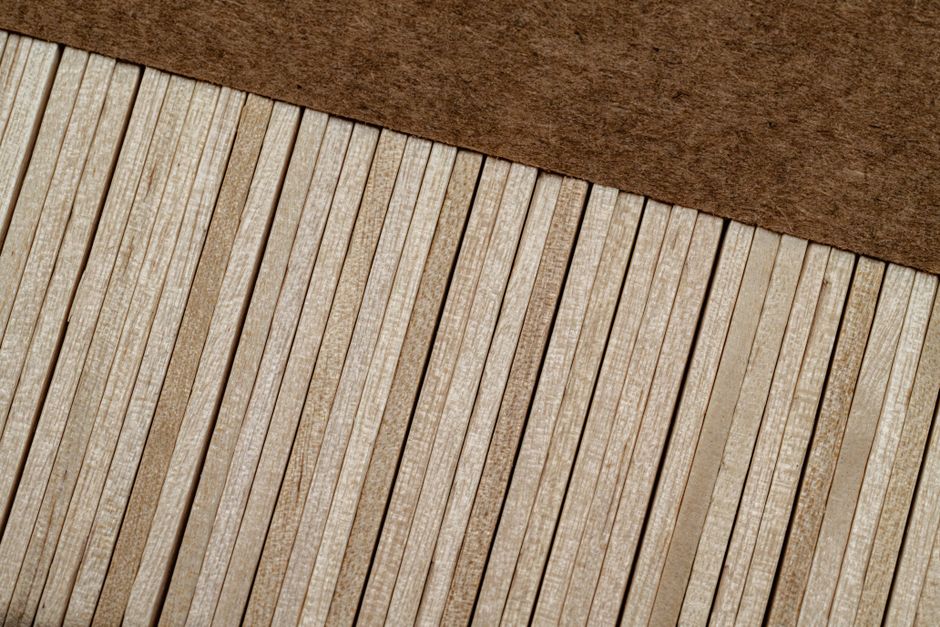
Value Engineering strategy: The optimal approach is not all-MDF or all-plywood but a hybrid: structural parts (side panels, bottom panels, load-bearing shelves) → plywood (12–18mm); internal dividers and back panels (non-structural, dry) → MDF (9–12mm); door panels and decorative face panels → MDF (for flat surface to laminate veneer). This mix reduces substrate cost by 8–15% while maintaining lifespan.
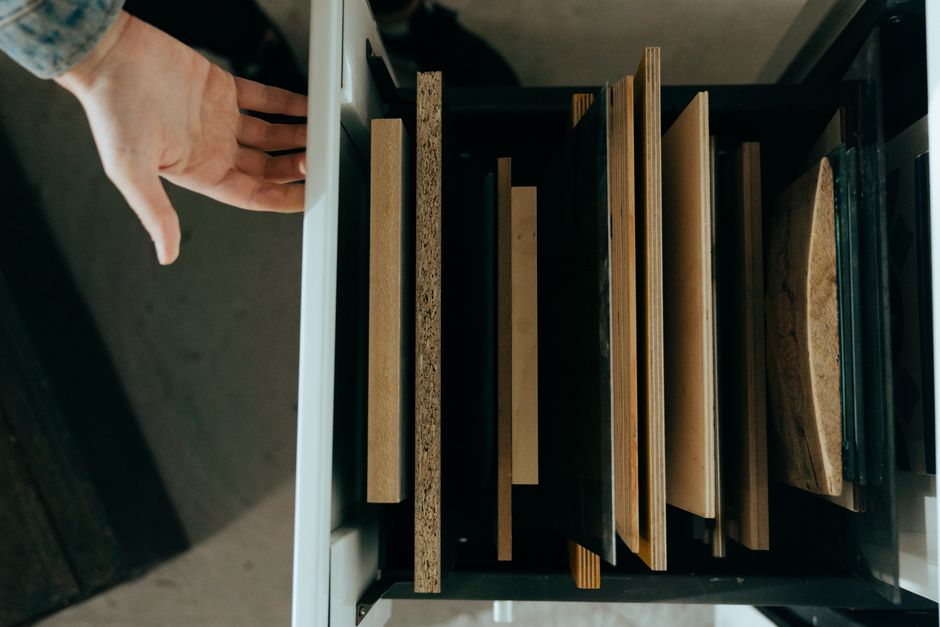
Buyer Action: Ask your factory to provide a hybrid material proposal with clear labeling of which parts are MDF and which are plywood.
Surface Finishes: Laminate (HPL) vs. Custom Wood Veneer
The surface finish is where hotel furniture material price comparison diverges most dramatically. Two quotes can look similar but differ by 30% because one specifies high-pressure laminate (HPL) and the other natural wood veneer with a full paint process.
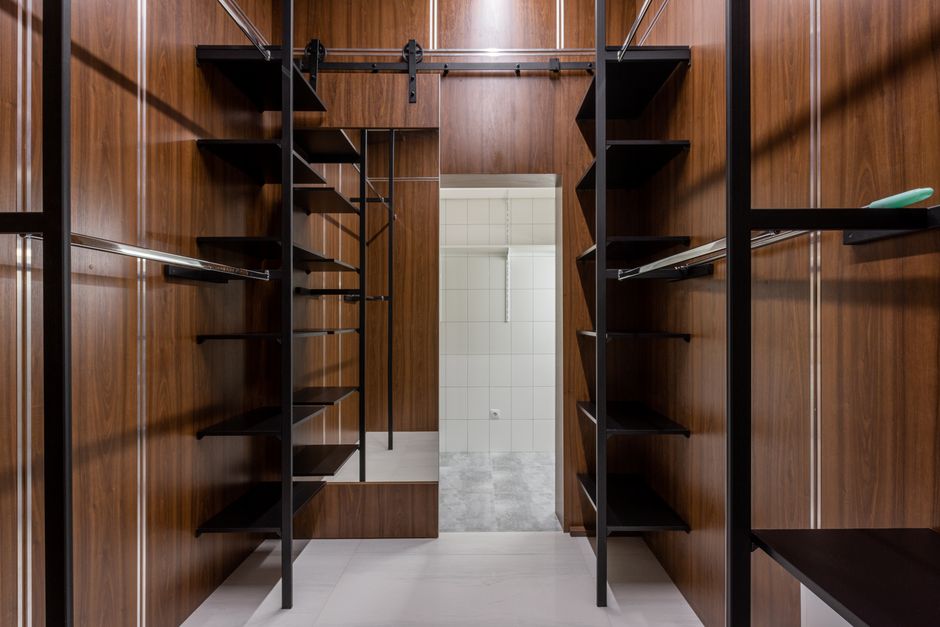
| Finish Material | Manufacturing Process | Cost Level | Typical Application | Hotel Grade |
|---|---|---|---|---|
| Melamine / Thermally Fused Laminate (TFL) | Low-pressure hot lamination, automated; simplest process | ★☆☆☆ Lowest | Internal dividers, non-visible surfaces, economy hotels | 2–3 star |
| High-Pressure Laminate (HPL) | Multi-layer kraft paper + phenolic resin pressed at 1,000–1,500 psi, then glued to substrate; thickness 0.8–1.2mm | ★★☆☆ Medium | Guest room visible surfaces, bathroom cabinets, corridor casegoods, dining tables, high-traffic public areas | 3–4 star, some 5-star base rooms |
| Custom Wood Veneer + Multiple Paint Coats | 0.3–0.6mm natural veneer hand-matched → glued to substrate → 5 primer coats + 3 top coats hand-sprayed; most labor-intensive | ★★★★ Highest | Luxury suites, executive lounges, high-end lobby furniture | 4–5 star luxury and boutique |
Detailed cost comparison: HPL vs. Wood Veneer
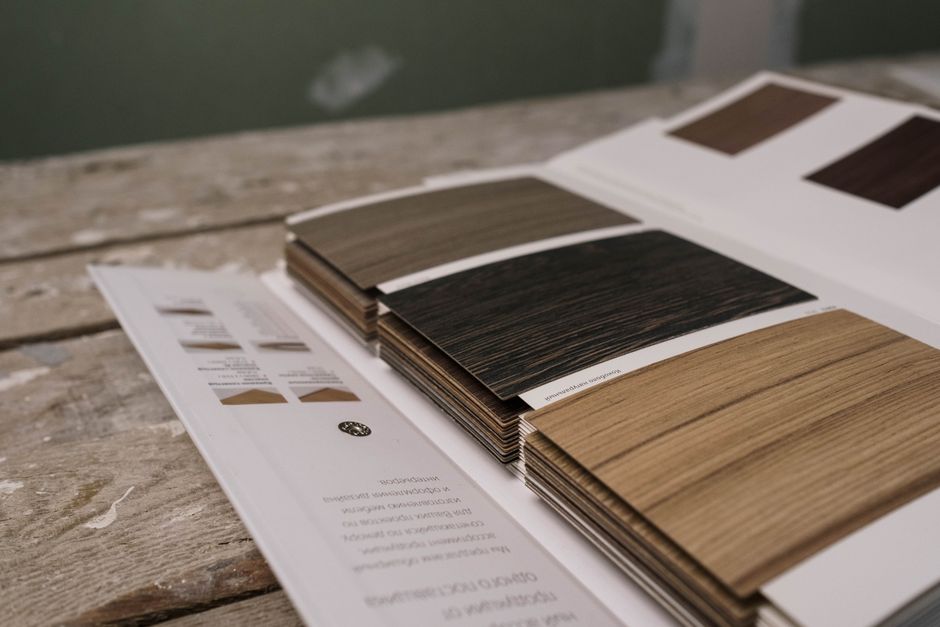
| Dimension | HPL | Custom Wood Veneer | Cost Impact |
|---|---|---|---|
| Material cost (finish itself) | USD 2–8/sqm | USD 5–30/sqm (depending on species) + adhesive | Veneer 1.5–3× more expensive |
| Processing steps | Machine lamination, precise, short cycle | Hand matching (bookmatch/slipmatch) → hand lay-up → sanding → 5 primer coats → 3 top coats (each with drying interval) | 6–8 more steps; labor time increases 200–400% per piece |
| Paint/lacquer cost | None—HPL is final surface | Full lacquer system: USD 8–25/sqm for paint + labor | Major cost driver for veneer pieces |
| Batch consistency | Machine-made, uniform color and grain; zero variation across large volumes | Natural wood variation; hand matching still yields visible differences across 200 chairs | Extra QC needed for veneer, adding cost |
| Scratch resistance | Pencil hardness H–2H; high surface hardness | Lacquer typically 2B–B; UV-cured lacquer can approach HPL but at higher cost | HPL more durable than standard lacquer |
| Moisture resistance | Excellent—non-porous, does not absorb | Needs sealing; thin veneer can delaminate in humidity | HPL clearly better in humid environments |
| Overall cost premium vs. HPL | Baseline 100% | 120–160% | Veneer 20–60% more expensive; complex shapes widen gap |
| Project-level impact | Baseline | Full-hotel veneer can increase total FF&E cost by ~30% | This is why similar quotes differ by 30% |
Value Engineering best practice: A strategic mix—internal dividers/non-visible faces → melamine (lowest cost); visible guest room surfaces → HPL (durable and economical); suite/executive lounge focal pieces (headboards, desks, wardrobe doors) → wood veneer (luxury). This approach cuts surface cost by 15–25% without compromising visual quality.
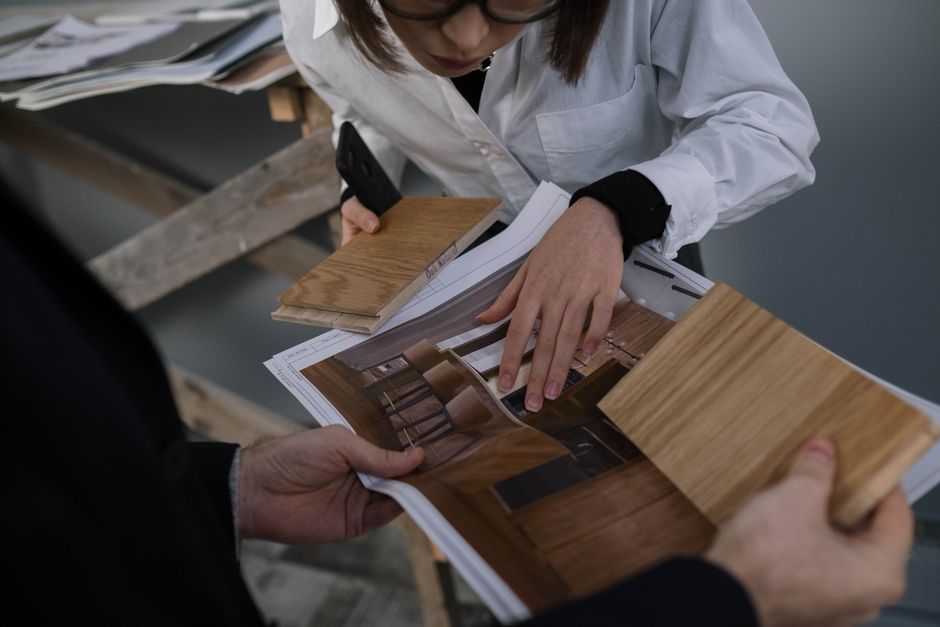
Buyer Action: When comparing quotes, ask for a line-item breakdown of the surface finish for each furniture piece. Specify which areas must be veneer and which can be HPL.
The Lifespan ROI: High Durability Contract Furniture Materials
Moving from material cost to lifecycle cost is critical. Residential furniture is designed for 2–4 hours of daily use by a single occupant. Hotel guest room furniture operates at 100% occupancy, 360 days per year, with an average 1.5-day stay—equivalent to 5–10× residential intensity. Public areas (lobby, restaurant) see up to 18 hours of high-traffic commercial use daily—20–30× residential intensity. This demands high durability contract furniture materials—specifications for screw holding, bending strength, and surface wear that exceed residential grades.
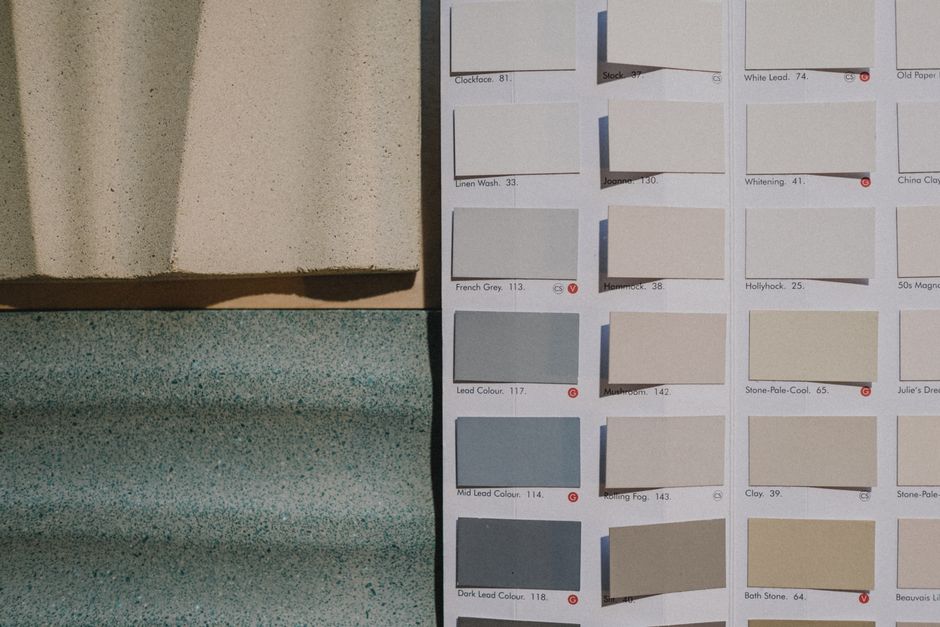
Key material durability specifications for contract-grade furniture
| Component | Residential Grade (wrong choice) | Contract Grade Minimum | High-End Contract Recommendation |
|---|---|---|---|
| Substrate | Low-density MDF or particleboard | E1 MDF or 12mm plywood per location | E0/CARB P2 MDF + 18mm plywood structural parts |
| Surface hardness (pencil test) | 2B–B (soft, scratches easily) | H-grade HPL | 2H UV-cured polyurethane coating |
| Hinges | Generic low-end, 10,000-cycle test | European brand (BLUM/HETTICH), 150,000-cycle | 200,000-cycle, soft-close |
| Drawer runners | Roller type, 10kg capacity | Ball-bearing full-extension (Blum Tandem), 30–45kg | Concealed/push-to-open, 50kg |
| Structural joinery | Glue + nail gun (back panel fixed) | Mortise-and-tenon + screw + glue triple fixation | Plus steel corner brackets |
| Fabric (seating) | 10,000–15,000 Martindale | 30,000 Martindale (guest room minimum) | 100,000+ (lobby/restaurant high traffic) |
Total Cost of Ownership (TCO) comparison
| Cost Item | Low-Cost Material (Residential/Low-Grade Contract) | Contract-Grade Material (Correct Choice) |
|---|---|---|
| Single wardrobe FOB cost | USD 300–500 | USD 500–900 |
| Expected lifespan (hotel use) | 2–4 years (MDF swells, hardware fails) | 7–10 years |
| 10-year total purchase cost (including replacements) | USD 900–2,500 (2–4 replacements) | USD 500–900 (one purchase) |
| Hidden replacement costs (room downtime, labor, disposal) | USD 300–800 extra | USD 50–100 (routine maintenance) |
| 10-year true TCO estimate | USD 1,200–3,300 per piece | USD 550–1,000 per piece |
Industry estimates suggest that paying more upfront for contract-grade materials saves 40–60% over a decade. The hospitality furniture manufacturing cost increase of 30–50% for proper materials is offset by avoiding a second furnishing cycle within five years. A proper hotel furniture material price comparison must factor in replacement cycles and hidden costs.
Buyer Action: In your evaluation, ask suppliers to provide a 10-year TCO estimate based on their material specifications.
Get an Engineered Cost Breakdown for Your Project
Value Engineering (VE) is not about cutting quality—it is about optimizing material combinations to meet both brand standards and budget. At Zhobai Hotel Furniture, our engineering team applies VE principles daily. For example, replacing solid wood drawer bottoms with 9mm plywood saves USD 8–15 per piece without visible difference. Switching a desk top from wood veneer to HPL reduces cost by USD 30–60 per desk while improving scratch resistance. Using 12mm MDF instead of 18mm MDF for internal wardrobe shelves saves 15% on substrate cost with no load-bearing issue. Combining plywood for internal structure and HPL for exterior can lower overall cost by 20–30% compared to a full veneer solution while extending structural life.
Every hotel project is different. A 200-room mid-scale property in Dubai has different material priorities than a 50-room boutique resort in Maldives. Stop guessing which material specification is right for your budget—upload your FF&E drawings or specifications, and our engineering team will deliver a personalized hotel furniture material price comparison for your exact project within 24 hours. No obligation, no generic quotes.
ZHOBAI HOTEL FURNITURE
Ready to Apply These Principles to Your Project?
Our engineering team responds to all project briefs within 24 hours. Share your FF&E scope — room count, property type, target timeline, and budget range — and we’ll provide a factory-direct assessment and indicative pricing within one business day.