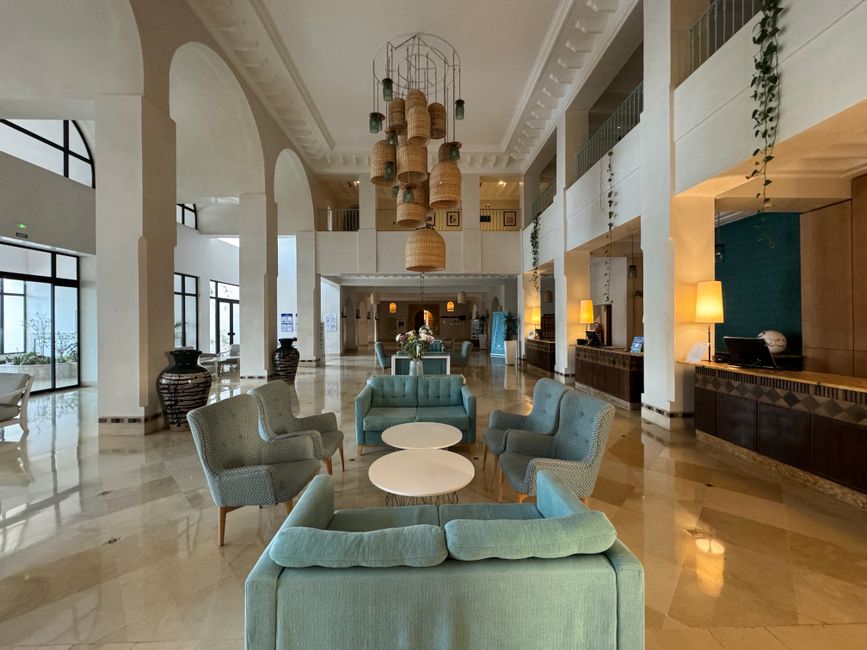
Imagine this: a 200-room five-star hotel project in the Gulf. The FF&E team has guest room costs nailed down to the dollar per key—beds, nightstands, desks, lamps, all line-itemed. Then the design firm submits the lobby scheme. The budget for lobby furniture alone comes in 60% higher than expected. That “simple-looking” main sofa? It requires 100,000 Martindale rub cycles, Crib 5 fire certification, and structural engineering for 18 hours of daily commercial use. Guest room standards simply do not carry over. This article breaks down the logic of public area furniture budgeting: why it costs more, where the money goes, and how to plan correctly at the RFP stage. We focus on the four highest-impact zones—lobby, reception, lounge, and restaurant—and explain why high-traffic spaces demand contract-grade specifications that drive hotel lobby furniture cost far above per-room benchmarks.
1. Why Public Area Furniture Costs More Per Square Foot Than Guest Rooms
Industry data shows that public areas—lobby, restaurant, executive lounge—consume 20–30% of total FF&E budget despite occupying less square footage than guest room corridors. The unit cost per square foot is 1.5 to 2 times higher. The reason is usage intensity. Residential furniture is designed for 2–4 hours of daily use. Hotel lobby seating is engineered for up to 18 hours of continuous occupation. That factor alone dictates heavier frames, denser foam, tougher upholstery, and certified fire retardancy.
Learn more about hotel restaurant furniture custom price benchmarks.
Learn more about hidden costs in hotel furniture procurement.
Learn more about complete guide to hotel furnishing costs.
The multiplier effect is easy to underestimate. A typical midscale lobby might run $100–$180 per square foot for furniture alone, while ultra-luxury projects exceed $500 per square foot. Compare this to guest room FF&E which often lands at $60–$120 per square foot. The “statement piece” phenomenon adds further pressure: one signature sofa or reception desk can consume 15–20% of the lobby budget.
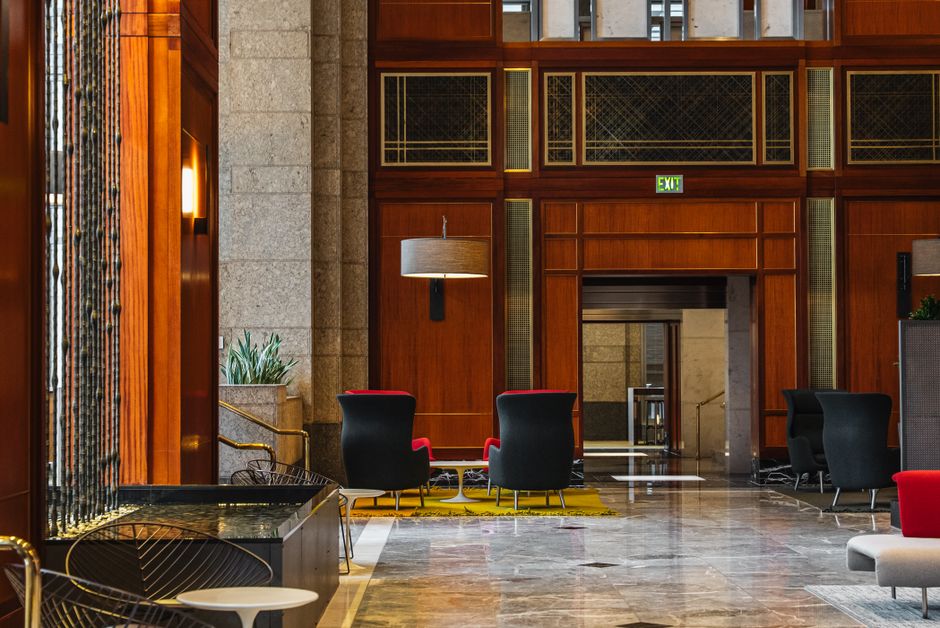
Commercial versus residential furniture may look identical from ten feet away, but the internal construction is worlds apart. Frame joinery (mortise-and-tenon plus screws vs. simple glue), foam density (2.5 lb/ft³ vs. 1.5 lb/ft³), fabric durability (100,000+ Martindale vs. 10,000–15,000), and fire certification—none of these are optional in a hotel lobby.
2. The Contract-Grade Standard: What “High-Traffic” Actually Requires
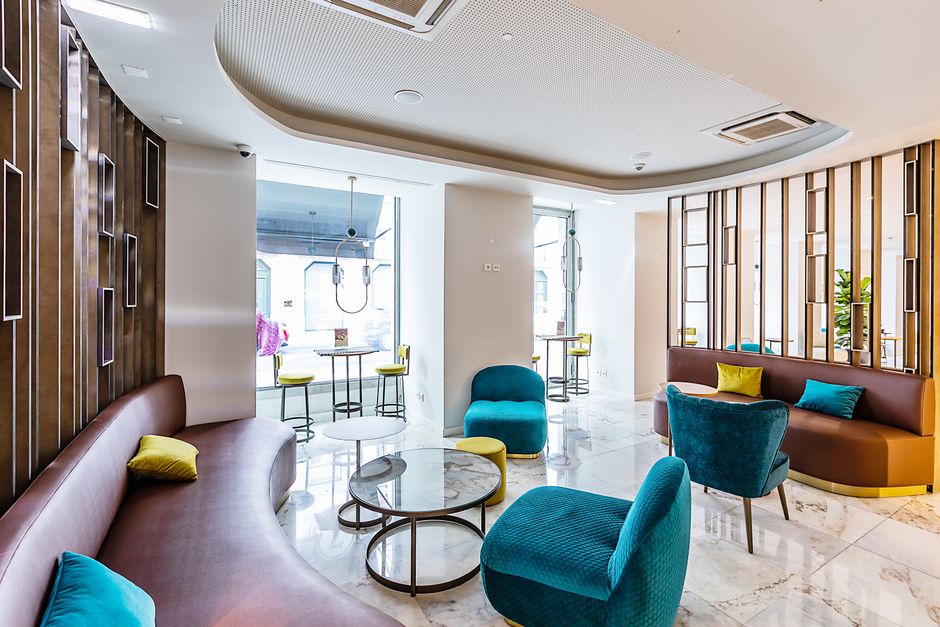
Any competent RFP for public area furniture must specify three technical tiers: fabric durability, fire retardancy, and structural integrity. Skipping any one leads to premature failure, safety violations, or costly replacements within 12–24 months.
2A. Martindale Rub Count – The Non-Negotiable Durability Metric
The Martindale test (ISO 12947) measures how many rub cycles a fabric withstands before visible wear. Commercial lobby seating demands a minimum of 80,000 cycles; 100,000+ is the standard for full-service hotels. Airport lounges or high-traffic lobbies should specify 150,000–250,000. Compare that to residential-grade fabrics at 10,000–15,000—which fail in under a year. Below is the quick-reference table for each zone.
| Application | Minimum Martindale | Recommended Spec | Why |
|---|---|---|---|
| Guest room headboard | 25,000 | 25,000–40,000 | Minimal abrasion from hair contact |
| Guest room chair | 30,000 | 40,000–60,000 | Low-frequency use, but still commercial baseline |
| Meeting room chair | 40,000 | 40,000–60,000 | Intermittent high use during events |
| Restaurant dining chair | 60,000 | 80,000+ | High turnover, food spill risk |
| Lobby lounge seating | 80,000–100,000 | 100,000+ | Continuous use, first impression zone |
| Airport-grade lobby | 150,000+ | 200,000–250,000 | Extreme traffic, highest replacement cost |
| Residential (banned in hotels) | 10,000–15,000 | N/A | Fails within 6–12 months in any public area |
Common procurement mistake: a Florida 400-room hotel accepted “commercial-grade leather” from a supplier that turned out to be bonded leather. Within 18 months the material delaminated, costing $125 per seat per year in damage. Correctly specified performance blend fabric costs $35 per seat per year. Always demand third-party Martindale test reports before approving samples.
2B. Fire Retardancy Standards by Market
Fire codes differ by region. Your RFP must state the applicable standard. A lobby sofa that passes only European norms may fail UAE local fire inspections. Use this reference:
- BS 5852 Crib 5 (UK/GCC hotels): Mandatory for all commercial upholstery in the UK; referenced by international brands in Middle East projects.
- CAL TB 117-2013 (US / US-brand projects in Middle East): Required by Marriott, Hilton, IHG for public area seating.
- EN 1021-1/2 (EU): Must pass both cigarette and match flame tests.
- NFPA 701 (US curtains): For hanging fabrics.
- UAE local fire authority: Verify with your fire consultant; enforcement varies across emirates.
2C. Structural Standards – BIFMA X5.4
BIFMA X5.4 is the gold standard for lobby and public seating. It subjects a chair to 250,000 front-to-back load cycles and 100,000 side load cycles. Specify minimum 300 lb weight capacity for lobby seating; 500 lb for luxury or oversized pieces. Foam density must be ≥2.5 lb/ft³ for high-traffic zones. Density below 1.8 lb/ft³ permadeforms within months. Frame construction: solid hardwood (beech/oak) or steel/aluminum alloy, joined with mortise-and-tenon plus screws and glue. Reject any frame that relies solely on glued softwood.
3. Zone-by-Zone Cost Breakdown: Lobby, Restaurant, Lounge & Reception
3A. Hotel Lobby
| Metric | Economy / 3-star | Midscale / 4-star | Upscale / 5-star | Ultra-luxury |
|---|---|---|---|---|
| Furniture cost per sq ft | $14–$18 | $22–$28 | $31–$38 | $94–$125 |
| Furniture cost per sq meter | $150–$194 | $237–$301 | $334–$409 | $1,011–$1,345 |
| Total lobby FF&E budget | $50–$80/sqft | $100–$180/sqft | $150–$300/sqft | $300–$500+/sqft |
| Statement piece allocation | Usually none | 10–15% of lobby budget | 15–20% | 20–30%+ |
| Per-floor corridor add-on | $2,000–$5,000 | $4,000–$8,000 | $6,000–$12,000 | Custom |
In 2026, lobbies are evolving from waiting rooms into multi-functional “living rooms” that host co-working, afternoon tea, and evening socializing. This demands modular seating with integrated power and reconfigurable layouts. Custom reception millwork is a separate line item: $15,000–$40,000 for midscale, up to $150,000+ for luxury.
The hotel lobby furniture cost per square foot directly correlates with the specified Martindale count and frame construction. A $150 sofa from a residential supplier will not survive six months in a lobby with 1,000 daily guests.
3B. Hotel Restaurant (Front of House)
| Metric | Midscale | Full-service | Fine dining |
|---|---|---|---|
| Per-seat furniture budget | $180–$350 | $350–$600 | $600–$800+ |
| 100-seat restaurant total | $18,000–$35,000 | $35,000–$60,000 | $60,000–$80,000+ |
| Chair per unit | $80–$200 | $200–$400 | $400–$800+ |
| Table top (surface + base) | $60–$150 + $40–$100 | $150–$350 | $350–$800+ (stone/wood) |
| Booth seating per linear foot | $200–$400 | $400–$700 | $700–$1,200+ |
| Bar area (entire) | $15,000–$40,000 | $40,000–$80,000 | $80,000–$200,000+ |
Restaurant seating undergoes heavy turnover and food spillage. Commercial PU faux leather (300,000+ Martindale) is the best cleanability choice. Top-grain leather is an upgrade. Bonded leather delaminates in 18–24 months—never specify it. Tabletop material hierarchy: stone/solid surface (highest stain/heat resistance) → UV-cured polyurethane on hardwood (mid/high preferred) → HPL (economic, scratch-resistant). Budget 3–8% of furniture value annually for replacement in F&B zones due to higher wear.
3C. Executive Lounge & Club Floor
The lounge is the highest FF&E cost per square foot in many hotels—it must impress high-value guests while matching lobby-level durability. Expect per-seat costs of $400–$1,200, with Martindale minimums of 100,000+. Custom millwork for servery, bar, and display cabinetry runs $20,000–$80,000. Technology integration (charging ports, hidden cable management) adds cost but saves 40–60% if done during manufacturing versus retrofitting. Budget soft furnishings (decorative pillows, curtains, rugs) separately.
3D. Reception / Front Desk Area
The reception counter is a custom millwork piece often priced per linear foot: $800–$3,000 per linear foot for midscale; $5,000–$8,000+ for luxury. Back feature walls range $10,000–$60,000+. The countertop must resist scratches from bags, keys, and luggage—choose stone, UV-cured hardwood, or high-grade HPL. Ergonomic considerations for staff (adjustable height, hidden equipment storage) add cost but reduce turnover. The reception zone is the face of the hotel; its hotel lobby furniture cost is justified by the statement it makes.
4. Contract Furniture from China: What to Specify in Your RFP
Chinese contract furniture manufacturers have proven capable of meeting international five-star standards for public area custom furniture. The key is knowing what to write into your RFP. Below is a mandatory clause checklist.
| RFP Clause | What to Specify | Consequence of Missing |
|---|---|---|
| Fabric Martindale | Minimum cycles per zone; require third-party lab report | Supplier substitutes lower grade; failure in 18 months |
| Fire certification | Exact standard (Crib 5 / CAL 117 / EN 1021); third-party cert required | Furniture fails local inspection; hotel opening delayed |
| Foam density | ≥2.5 lb/ft³; ILD 45–55; reject below 1.8 | Permanent collapse within months |
| Frame construction | Hardwood (beech/oak) or steel/Al; mortise+tenon+screws+glue; structural drawing required | Frame loosens and cracks in 2–3 years |
| Material substitution prohibition | Contract clause with penalty; 41% of Chinese factories substitute wood species in small orders | Receive rubberwood instead of ash; dispute difficult |
| BIFMA X5.4 test report | All public seating must include report | Structural risk; warranty void |
| Sample approval process | Require 1:1 physical mock-ups (sofa + dining chair minimum); factory shop drawing review | Production deviates from design; costly rework |
| Batch consistency | Specify color and dimension tolerances; pre-shipment photo approval | 200 chairs with visible color variation |
When evaluating a contract furniture manufacturer China for public area work, verify they have executed similar hotel lobby projects—ask for real photos, not renderings. Check that their in-house design team handles the complex shapes and large assemblies typical of lobby and restaurant pieces. Factory size matters: a 500-room lobby sofa order needs assembly space. Ensure they provide ISPM 15 fumigation, certificates of origin, and fire documents. Insist on mid-production inspection at 20–40% completion and final pre-shipment inspection by a third party (SGS/BV/Intertek).
Many developers discover too late that a low per-unit hotel lobby furniture cost from a supplier without these controls results in hidden expenses—replacement shipping, installation delays, and brand damage.
5. Total Cost of Ownership (TCO): The Real Price of Cheap Public Area Furniture
| Dimension | Residential / Low-end Commercial | Contract-grade (Correct Choice) |
|---|---|---|
| Purchase price (lobby chair) | $150–$300 | $600–$1,200 |
| Expected commercial life | 1–2 years | 7–10 years |
| Replacement cycles over 10 years | 5–10 times | 1 time (or 0 with maintenance) |
| 10-year total cost per seat | $750–$3,000 | $600–$1,200 |
| Upholstery delamination risk | Bonded leather fails at 18–24 months; $125/year loss | Full-grain leather or high-performance blend; $35/year |
| Foam collapse | Low-density foam deforms in 6–12 months | 2.5 lb/ft³ foam retains shape 7–10 years |
| Fire compliance risk | Uncertified material may block opening | Certified; inspection passes cleanly |
| Brand reputation impact | Worn furniture visible in reviews; low TripAdvisor scores | Impeccable appearance throughout the cycle |
TCO conclusion: A $300 lobby chair can cost $3,000 over ten years when you factor in multiple replacements, logistics, and installation. A $1,000 BIFMA-compliant, 100,000+ Martindale, Crib 5 certified chair costs $1,000 plus maintenance. Cheap public area furniture is never cheap—it simply defers the cost. And when the deferred cost arrives, it comes with lost revenue from delayed openings, negative guest reviews, and emergency procurement premiums.
At Zhobai Hotel Furniture, our engineering team has managed FF&E for over 20 luxury projects across the Middle East, Europe, and Asia. We specify the exact Martindale counts, foam densities, and BIFMA certifications required for each zone—and we factory-test every assembly before shipping. When you request a hotel lobby furniture cost breakdown from us, you receive a line-item TCO analysis that shows the real cost over the furniture’s lifecycle. That is the difference between a supplier who ships boxes and a partner who ensures your public areas perform for a decade.
ZHOBAI HOTEL FURNITURE
Ready to Apply These Principles to Your Project?
Our engineering team responds to all project briefs within 24 hours. Share your FF&E scope — room count, property type, target timeline, and budget range — and we’ll provide a factory-direct assessment and indicative pricing within one business day.