In 2026, hotel developers face a new operational reality: the Strait of Hormuz supply chain disruption has escalated from a media headline into a direct cost and timeline factor for FF&E delivery. This article provides a risk-management framework grounded in verified data from IMO, JMIC, and carrier advisories, translating geopolitical instability into actionable logistics and procurement decisions.
Hormuz, Red Sea and Suez: Do Not Confuse Three Different Risks
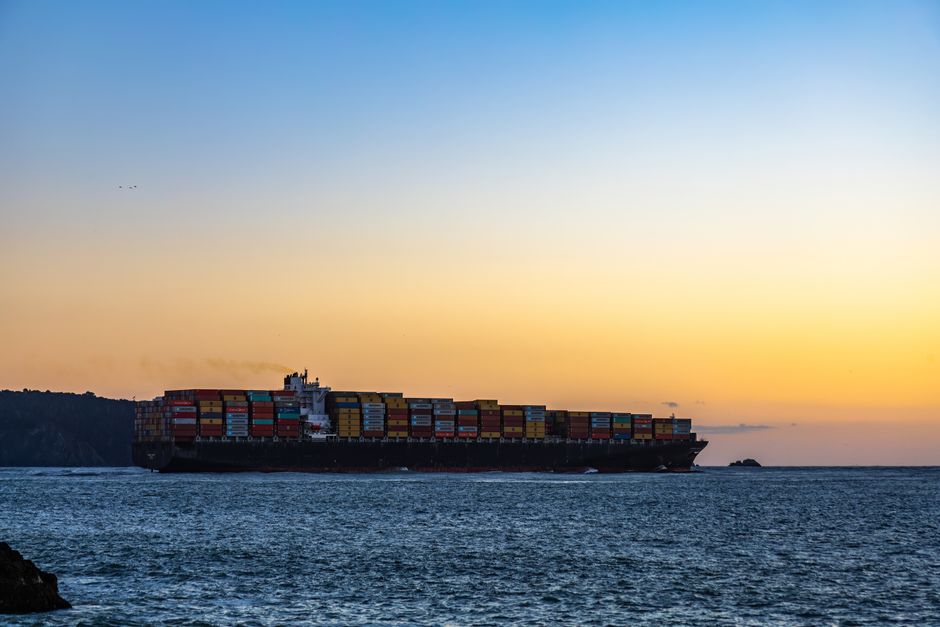
The Strait of Hormuz is the gateway to the Persian Gulf, through which approximately 20% of the world’s oil and significant LNG trade passes daily, according to the U.S. Energy Information Administration. While the Strait of Hormuz supply chain disruption primarily threatens vessels entering or leaving Gulf ports such as Dubai, Dammam, or Kuwait, the Red Sea and Suez Canal disruptions affect Asia-Europe routes via the Bab el-Mandeb strait. A common mistake is to assume that a Hormuz closure forces the same rerouting as a Red Sea crisis. In reality, a Hormuz blockage has no equivalent maritime detour—ships destined for Gulf ports must still approach the chokepoint. The Strait of Hormuz supply chain disruption does not automatically shift container traffic around the Cape of Good Hope; that route is relevant only for Suez diversions. Hotel project teams must assess which chokepoint affects their specific port of discharge. For a hotel in Dubai, the Strait of Hormuz supply chain disruption directly impacts berth availability, war-risk surcharges, and transit time variability. For a hotel in Cairo or Athens, the Red Sea risk is paramount.

As of July 2026, IMO confirmed new vessel attacks in the Strait (IMO Middle East topic page, 8 July 2026). The Joint Maritime Information Centre (JMIC) Advisory Note 010-26 rates the threat level as MODERATE but warns of naval mines and strict procedural requirements. This is not a full closure—but it means operational restrictions, higher insurance, and schedule unpredictability. Carriers such as Maersk have issued advisories about limitations entering and leaving the Gulf (Maersk operation updates, March-July 2026). MSC announced war risk surcharges of USD 2,000 per 20-foot container, USD 3,000 per 40-foot container on certain Middle East trades (MSC customer advisory, 4 March 2026). These are real costs that flow directly into FF&E budgets.

How Fragmented FF&E Procurement Creates a Domino Failure
Hotel FF&E projects typically involve multiple suppliers: casegoods, seating, lighting, soft goods, and accessories. Each supplier has its own design approval cycle, raw material sourcing, production schedule, and shipping window. When a disruption like the Strait of Hormuz supply chain disruption occurs, the lack of alignment across suppliers amplifies delays. The chain reaction unfolds as follows: design freeze delays from the brand or interior designer push back material purchasing. If a custom veneer or approved hardware is not available in time, production stalls. Booking a container on a vessel that routes through the Strait of Hormuz becomes uncertain if the port is affected—ETDs slip, and ETAs become speculative. Furniture is not floor-ready because nightstands arrive but tops or hardware are missing. Installation crews wait or need remobilization. Rooms remain unapproved for sale. The hotel opening date moves. Each step compounds cost: additional storage, expedited air freight for missing parts, idle labor, and lost revenue. The Strait of Hormuz supply chain disruption does not cause every delay—but it magnifies existing procurement fragmentation. The solution is not to eliminate disruption but to reduce the number of unmanaged interfaces.

According to UNCTAD, rerouting vessels around the Cape of Good Hope adds distance, cost, and emissions, and can lengthen transit by 7 to 14 days per leg (UNCTAD Navigating Troubled Waters, 2024). For hotel FF&E, that margin can push a delivery past the opening deadline.

What a Resilient hotel turnkey furnishing solution Actually Controls
A hotel turnkey furnishing solution does not make risks disappear—it consolidates them under a single management interface. The core controls are: unified master schedule linking design freeze, production, packing, shipping, and installation milestones; consolidated booking of all FF&E volumes per floor or opening phase to reduce ETA scatter; single point of contact for carrier, freight forwarder, customs clearance, and site status; complete kitting per room type so that no item arrives without its matching components; packaging engineering that improves container utilization through knockdown design, nesting, and standardized carton sizes; and pre-defined route alternatives with triggers for switching to plan B. When a Strait of Hormuz supply chain disruption threatens a Gulf-bound shipment, the turnkey provider can reallocate cargo to a secondary port, activate a buffer stock held in a regional warehouse, or expedite critical small items via air without waiting for a separate supplier’s decision. The value is not in avoiding disruption—it is in compressing the decision-making chain from weeks to hours.
Real-world control parameters
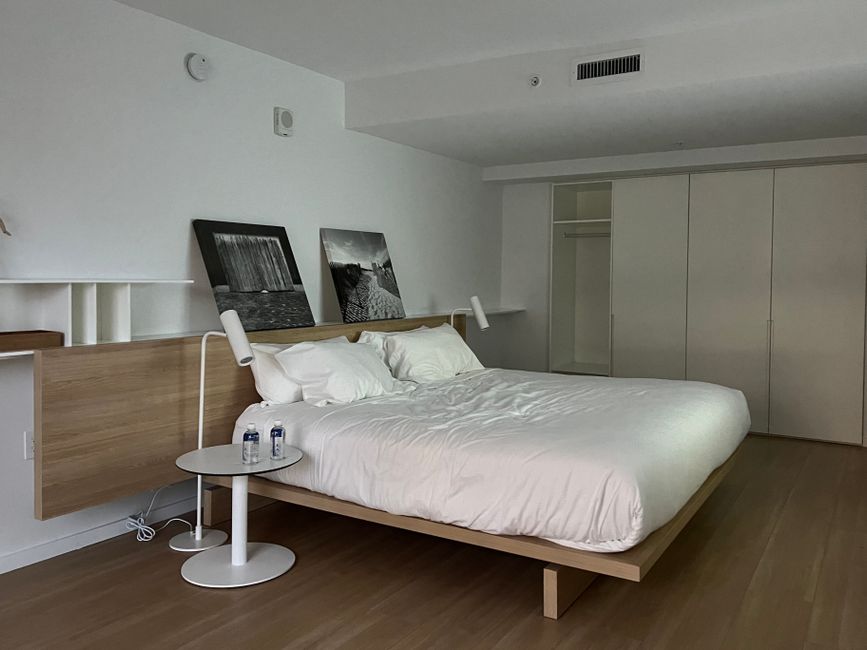
At Zhobai, our engineering team runs a pre-production container utilisation simulation on every project. We measure CBM, loading factor, breakage risk, and on-site assembly hours before cutting material. This data drives the decision to flat-pack or assemble, not a generic rule. The goal is to reduce the number of containers without increasing field installation cost or damage rates. A turnkey furnishing solution’s real measure is delivery-date predictability, not a promise of zero delay.

Alternative Shipping Routes for Furniture: A Decision Matrix
For hotel FF&E impacted by the Strait of Hormuz supply chain disruption, several route alternatives exist. Each has distinct suitability for cargo type, time sensitivity, cost, and capacity. The table below compares the primary options.

| Route | Best For | Lead Time (Port-to-Port) | Cost Premium vs. Baseline | Capacity | Key Risk |
|---|---|---|---|---|---|
| Sea: Alternate port + landbridge | Gulf destinations where main port is restricted | +3–7 days | Low to moderate (trucking) | High | Customs at alternate entry, border delays |
| Sea: Cape of Good Hope | Asia to Europe/Mediterranean | +7–14 days eastbound, +7 westbound | High (fuel, insurance) | High | Time variability, Suez recovery |
| Rail: China-Europe Railway Express | High-value, time-sensitive goods to European inland | 11–19 days station-to-station (excl. pickup/delivery) | Moderate to high | Limited (per train max 50 containers) | Border gauge changes, customs, capacity availability |
| Air freight / courier | Small critical parts (hardware, samples, missing components) | 2–5 days | Very high (per kg) | Low | Size/weight limits, cost escalation |
| Regional buffer warehouse | Decouple ocean arrival from floor readiness | N/A (inventory holding) | Storage cost | Dependent on facility | Inventory risk, damage, design change |
It is critical to note that the Strait of Hormuz supply chain disruption does not have a single alternative route that replaces the Strait for Gulf access. Instead, a combination of port diversion, buffer stock, and expedited last-mile trucking is required. The China-Europe Railway Express network handled 20,022 trains in 2025 (Xinhua, 10 July 2026), confirming its scalability, but door-to-door times for hotel furniture can exceed 25 days due to consolidation and customs. Always request a project-specific door-to-door quote.
The Opening-Date Economics of FF&E Delivery Delays
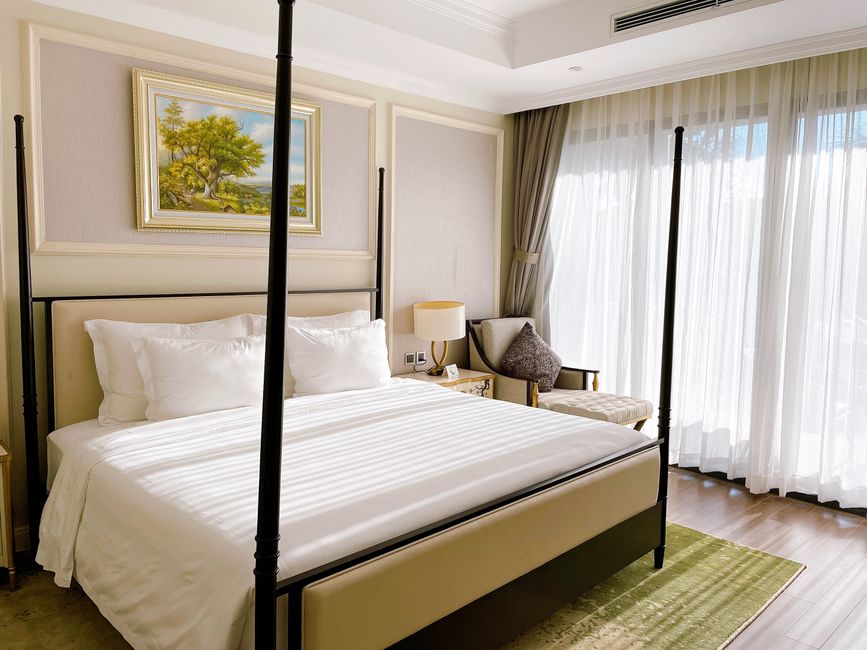
Delays caused by the Strait of Hormuz supply chain disruption—or any chokepoint event—are quantifiable in financial terms. Hotel developers should model three categories of cost: potential room-revenue opportunity loss, financing cost of delayed project completion, and logistics anomaly expenses. For a 200-room hotel with an expected occupancy of 65% and ADR of USD 180, a 14-day delay represents USD 327,600 in gross room revenue that is not captured (200 × 0.65 × 180 × 14). This is not profit but top-line revenue; net effect depends on variable costs. Additionally, financing cost on undrawn or drawn project capital at 8% annual cost over 14 days for a USD 30 million project equals approximately USD 92,000. War-risk surcharges, port storage, and container detention add another USD 20,000–50,000. The cumulative impact of hotel FF&E delivery delays can exceed USD 400,000 for a midsize property. Reducing hotel construction budget requires controlling these delay costs, not just unit prices.
Cost components to track
- Potential room-revenue loss = number of rooms × expected occupancy × ADR × delay days
- Financing holding cost = outstanding project capital × annual cost of capital × delay days / 365
- Logistics anomaly cost = war surcharges + diversion fees + storage + demurrage + expedite fees
- Installation waiting cost = crew daily rate × idle or remobilization days
- Packaging optimization net gain = container savings – extra packaging material – assembly time – breakage risk delta
How a Contract Furniture Manufacturer in China Should Prepare
A contract furniture manufacturer China should demonstrate capabilities that reduce risk under chokepoint scenarios. Selection criteria must go beyond price. The manufacturer should have a shop drawing and BOM system that prevents version mismatches; the ability to source critical hardware and veneers from secondary suppliers; an inventory of long-lead standard items (hinges, runners, packaging materials); pre-production container loading simulation to maximize utilization and reduce number of containers; relationships with multiple freight forwarders and carriers to switch booking when a Strait of Hormuz supply chain disruption affects a preferred line; procedures for war-risk insurance and contingency routing; and a project-level tracking system with escalation triggers for delays exceeding 7 days. At Zhobai, operating from a manufacturing facility of over 10,000 m² with ISO 9001 certification, we structure every project with a milestone plan, route-risk matrix, and communication protocol. The goal is to give the developer one accountable entity from factory floor to final installation, reducing the number of handoffs that can break under disruption.
A 10-Point Hospitality Logistics Risk Checklist
- Is the project divided into opening-critical rooms, public areas, and later phases with clear delivery priorities?
- Is there a design freeze date with a change order cutoff that prevents last-minute specification changes?
- Are critical finishes, hardware, and stone approved with at least one pre-qualified secondary source?
- Is every shipment kitted by room number and floor, not by product category?
- Have we obtained route proposals from at least two carriers or freight forwarders, including alternatives for Strait of Hormuz disruption?
- Does the contract clearly define who bears war-risk surcharges, diversion fees, and force majeure costs?
- Is there a pre-approved budget ceiling and sign-off process for air-freight expedite or rail diversion?
- Has a container loading simulation been run comparing flat-pack vs. assembled CBM, loading rate, breakage risk, and field labor cost?
- Is there an ETA deviation threshold (e.g., 7 days late) that automatically triggers a meeting to activate contingency plan B?
- Does the site have the capability to receive cargo at an alternate port, hold buffer stock in a local bonded warehouse, and coordinate second-mile delivery?
Frequently Asked Questions
Does the Strait of Hormuz supply chain disruption affect all hotel furniture shipments?
No. It primarily affects vessels calling at Persian Gulf ports. Hotels outside the Gulf region are more likely to be impacted by Red Sea/Suez disruptions. However, indirect effects such as increased fuel costs, insurance premiums, and global vessel capacity constraints can affect all shipping lanes.
Can we rely on the China-Europe Railway Express for all hotel FF&E to Europe?
Not for an entire project. The railway is best for high-value, time-sensitive items or parts. Door-to-door times vary from 15 to 30+ days depending on origin, destination, customs, and consolidation. It is a complementary route, not a full replacement for sea freight.
What is the single most effective way to protect against chokepoint delays?
Reduce procurement fragmentation. A turnkey furnishing solution with a unified schedule, consolidated bookings, and single-point accountability compresses decision cycles and avoids the domino effect of multiple suppliers each reacting independently to disruption.
Should we keep buffer inventory of furniture?
Buffer inventory helps decouple shipping from installation timing but carries risks: storage cost, potential damage, design changes, and colour batch variation. It is most effective for standardised items like universal casegoods, hardware, and packing materials—not for custom veneers or patterned fabrics.
When navigating the current Strait of Hormuz supply chain disruption, securing a resilient interior supply chain can become a deciding factor in the hotel opening timeline. The firms that prepare route alternatives, consolidate procurement, and quantify delay costs will maintain control of their opening date. The Strait of Hormuz supply chain disruption is not a crisis to fear—it is a variable to manage with data, contracts, and a unified project plan.
ZHOBAI HOTEL FURNITURE
Ready to Apply These Principles to Your Project?
Our engineering team responds to all project briefs within 24 hours. Share your FF&E scope — room count, property type, target timeline, and budget range — and we’ll provide a factory-direct assessment and indicative pricing within one business day.